❌

Vue normale

  • ✇Yanko Design
  • This LEGO Fujifilm Quicksnap is a 1:1 tribute to the camera on its 40th anniversary (box included!)
    Fujifilm celebrated the QuickSnap’s 40th birthday this year the way any responsible camera company would, by announcing new models. The QuickSnap Black and White ($22.90) and the waterproof QuickSnap Active ($24.75) are due this fall, marking the first time Fujifilm has loaded black-and-white film into a QuickSnap. One LEGO Ideas builder took a different approach to the celebration, reaching for green, black, red, and white bricks to rebuild the Japanese version at full size. Of the two birthda
     

This LEGO Fujifilm Quicksnap is a 1:1 tribute to the camera on its 40th anniversary (box included!)

8 novembre 2026 à 11:20

Fujifilm celebrated the QuickSnap’s 40th birthday this year the way any responsible camera company would, by announcing new models. The QuickSnap Black and White ($22.90) and the waterproof QuickSnap Active ($24.75) are due this fall, marking the first time Fujifilm has loaded black-and-white film into a QuickSnap. One LEGO Ideas builder took a different approach to the celebration, reaching for green, black, red, and white bricks to rebuild the Japanese version at full size. Of the two birthday presents, I know which one hits the nostalgia button harder.

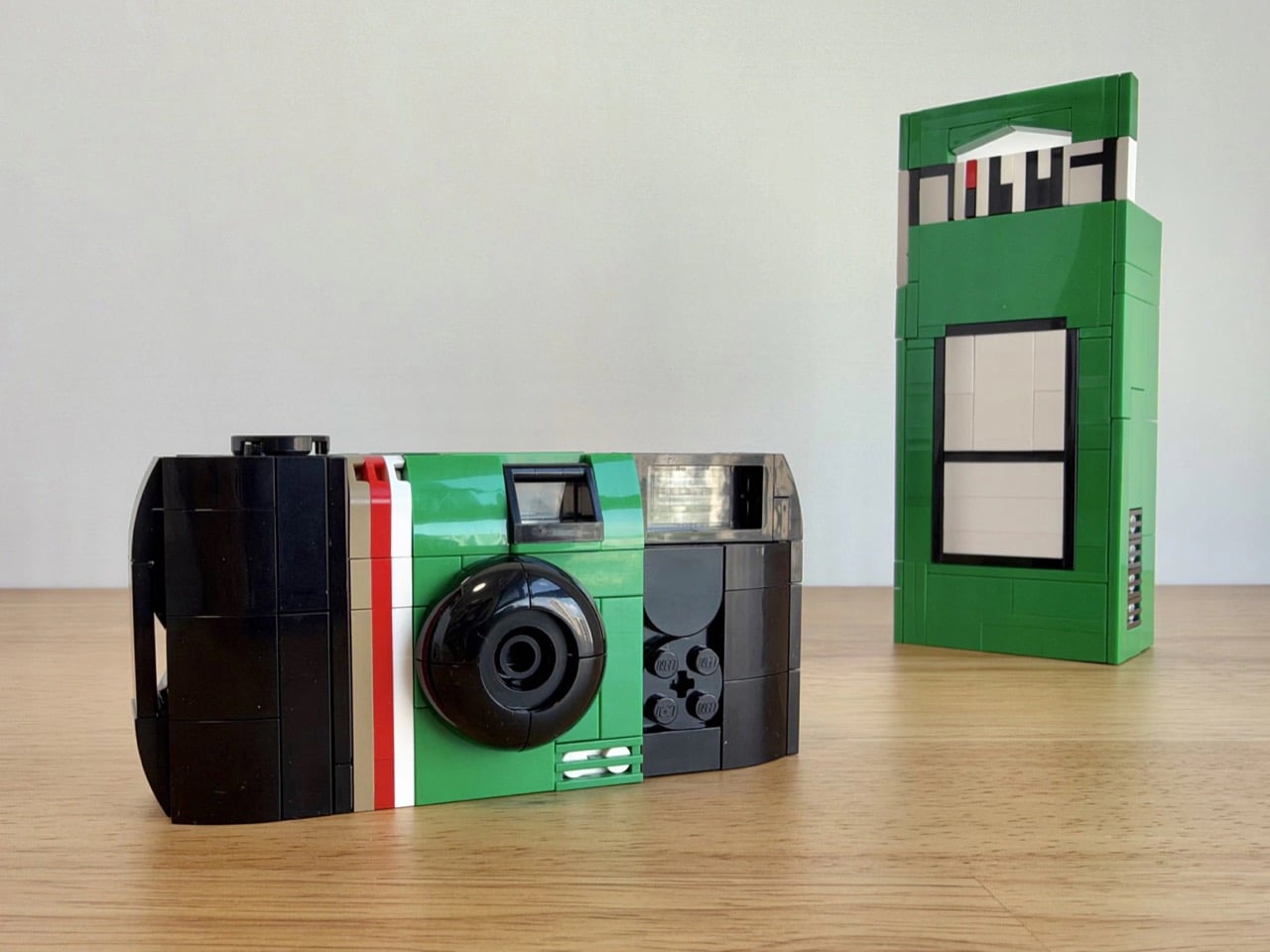
That builder is MarshallThrilledLobster, and the subject is the Simple Ace, known in Japan as Utsurundesu, which roughly means “It takes pictures!” The name came from a Fujifilm employee who blurted it out when someone asked whether the camera would really work. It might be the best product naming story in camera history. The LEGO version sits at 1:1 scale, comes with a full-size brick replica of its retail box, and packs a few working details. Fujifilm designed the original cameras to be collected after use, taken apart, and rebuilt, making them a fitting subject for LEGO.

Designer: MarshallThrilledLobster

A 1:1 Simple Ace, Right Down to the Clicking Wheel

The real Simple Ace measures 4.25 by 2.1 by 1.3 inches (108 by 54 by 34mm), and this build recreates it at full size. That works out to 13.5 studs across, an awkward number that helps explain why so much of the build runs sideways using SNOT (studs not on top) techniques. The green body wears its red and white stripes, with a domed black lens right where your finger used to block every third shot. Up top, a half-buried Technic gear stands in for the winding wheel. Turn it and it clicks, like advancing a fresh frame.

The viewfinder is a clear tunnel that lines up front to back, so you can actually squint through it. That’s more faithful than it sounds, since the real camera uses a simple reverse-Galilean plastic finder, essentially a tunnel with two lenses. A strap loop is worked into the side of the shell, and the outer surfaces are tiled smooth with no exposed studs. The result reads as molded plastic from across the room. Only up close do the seams give away that this camera came out of a parts bin.

The Box Gets the Brick Treatment Too

My favorite detail, though, is the packaging. The builder recreated the Simple Ace’s tall retail box at full size, with the 写ルンです logo rendered in blocky pixel lettering and barcode details built from black and white tiles. Stand it next to the camera and you’ve got a Tokyo convenience store shelf on your desk. It doubles as a display stand, giving the small camera some height and context. For anyone who grew up with these, the box is half the memory, since tearing it open meant the vacation had officially started.

Packaging as an accessory has precedent in LEGO Ideas. The Polaroid OneStep SX-70, which started as a fan build by Marc of Minibrick Productions, became set 21345 in 2024 with a buildable film pack and three illustrated photos. That set established a precedent for collaborating with a real camera brand, while this QuickSnap remains a fan proposal. A full-size retail box goes further than a film pack, giving Fujifilm’s graphic design the same care as its industrial design. That feels right for packaging this recognizable in Japan.

A Disposable Built for Second Lives, Now Up for a Vote

Fujifilm opened a QuickSnap recycling center in 1988, just two years after the camera launched. By 1998, it was running an automated factory that disassembled returned cameras, inspected the parts, and built new cameras from them. In the US today, up to 60% of each QuickSnap is made with reused camera materials. The builder frames the project around that idea: a so-called disposable product designed for a second life. LEGO bricks have been taken apart and rebuilt since 1958, though their next life might be a spaceship.

The Fujifilm QuickSnap build went live on LEGO Ideas on November 6 and has 105 supporters as of this writing, with 425 days left to reach the 1,000-supporter milestone. Fans submit builds, and projects that reach 10,000 supporters get reviewed by LEGO for an official set. That’s a long climb for a camera most people know as a $20 impulse buy. If you’ve got a shoebox of fuzzy prints somewhere, head to the LEGO Ideas page and give it your vote. It’s the one QuickSnap you’ll never have to drop off at the lab.

The post This LEGO Fujifilm Quicksnap is a 1:1 tribute to the camera on its 40th anniversary (box included!) first appeared on Yanko Design.
  • ✇Yanko Design
  • Instax Mini Evo 2 Brings Retro Fun Without Giving Up Digital
    One of the things that I’d like to explore more in 2027 is taking more photos of the things around me and the things I’ll be experiencing in the new year. I’m still not good enough to warrant getting a DSLR camera, but I would be willing to try out digital cameras where I can experiment and play around with filters and textures while also being able to make the photos live outside of my camera roll. Fujifilm’s Instax Mini Evo 2 is one such camera, with tactile controls, a large touchscreen, 10
     

Instax Mini Evo 2 Brings Retro Fun Without Giving Up Digital

28 octobre 2026 à 10:20

One of the things that I’d like to explore more in 2027 is taking more photos of the things around me and the things I’ll be experiencing in the new year. I’m still not good enough to warrant getting a DSLR camera, but I would be willing to try out digital cameras where I can experiment and play around with filters and textures while also being able to make the photos live outside of my camera roll.

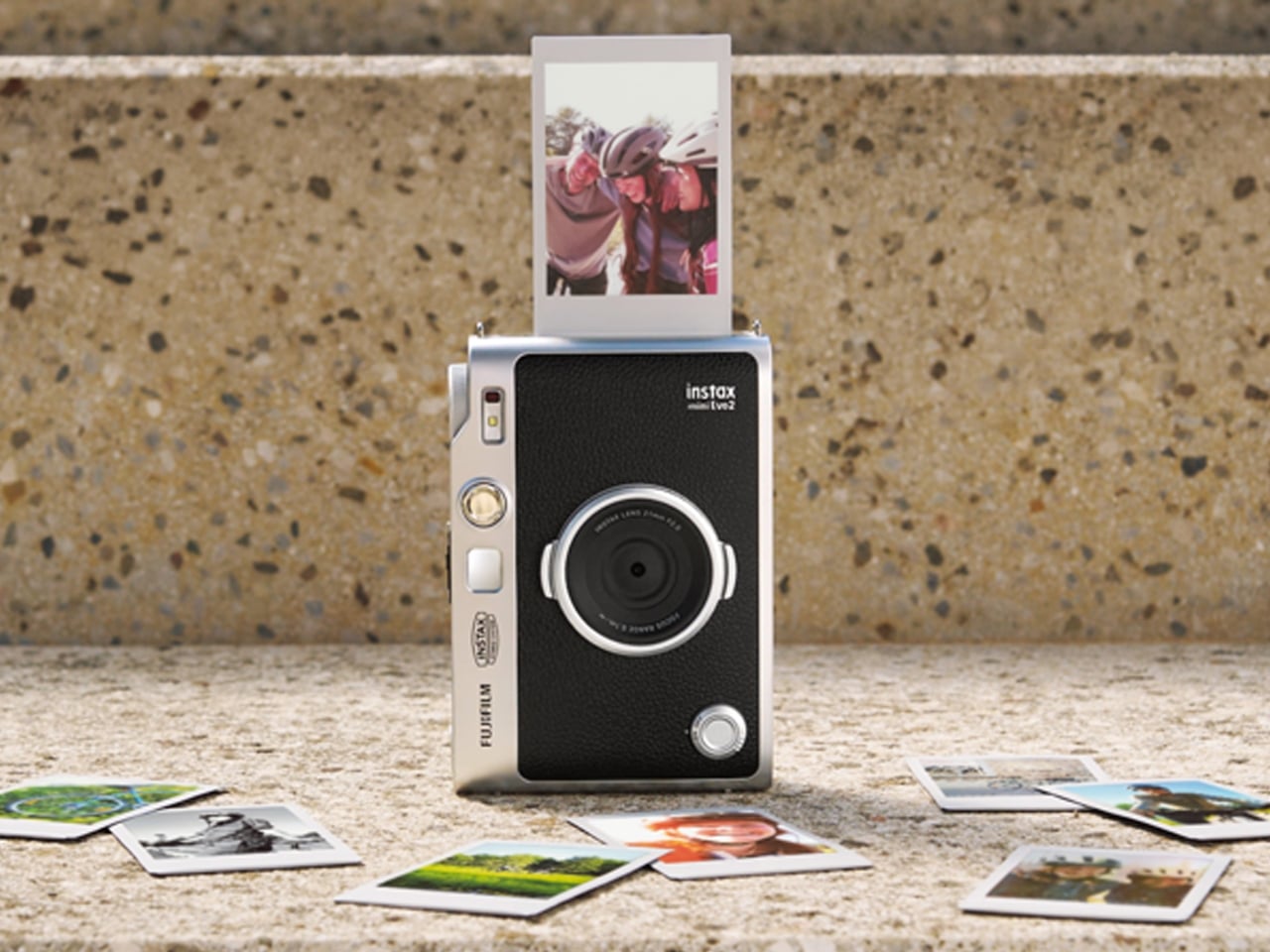
Fujifilm’s Instax Mini Evo 2 is one such camera, with tactile controls, a large touchscreen, 10 lens effects and 10 film effects to create 100 combinations, and, of course, the ability to print photos. This second generation of the hybrid instant camera and photo printer keeps its predecessor’s retro feel and range of creative combinations while adding some modern conveniences.

Designer: Fujifilm

The camera’s tactile controls add a tangible interface to this digital camera, giving it an analog-inspired way of operating. You have a lens dial to change from one lens effect to another, while the film-effect dial lets you go through the 10 different film effects. There’s also a lever that you pull to print out the photo, making printing a separate, deliberate action.

The 4.5-inch touchscreen is larger than the original Mini Evo’s display. Its Expanded View mode displays the area outside your intended print frame. You get a framing guide to show you what the photo will actually include, giving you an added layer of compositional awareness. This could be useful when you’re waiting for a moving subject to enter the frame. The touchscreen complements the dials by handling settings, image browsing, and editing, including cropping and adjustments to brightness, contrast, and saturation. You can make those changes on the camera before deciding which pictures deserve a print.

The Mini Evo 2 also now has an Immersive Movie feature that captures the four seconds leading up to your photo, producing a five-second silent clip that includes the shutter moment. It requires a separately sold microSD card. Rather than reducing the still photo to a smaller size, Fujifilm lists separate recording resolutions: 2144 × 2860 pixels for normal still images and 560 × 992 pixels for video. The short clip gives you a little more of what happened around the photograph, although it isn’t a replacement for recording longer videos.

For still photos, the camera can also record at approximately 13 megapixels when a microSD card is inserted and Expanded View is turned off. That gives you a higher-resolution option, but it isn’t the default for every shot. It’s worth knowing the conditions rather than assuming that every image you take will have the same resolution.

What appeals to me most is having a dedicated digital camera that encourages a little more playing around. I’d like to spend more time choosing how a photo looks before taking it, rather than scrolling through editing options afterward. The combination of physical dials and a touchscreen feels like an interesting way to approach that, with familiar digital controls alongside something you can actually turn.

The built-in printer adds to the appeal of having two devices in one. It works with photos taken on the camera and pictures from your smartphone through the Instax Mini Evo app. The app also supports remote shooting, so you can join a group photo instead of always being the person behind the camera. Your phone still has a role, but it doesn’t have to handle every part of taking the picture. Combining a digital camera and printer isn’t new for Fujifilm, so the novelty here is more about how the pieces work together. The larger touchscreen and new shooting modes give me more reasons to be interested in the camera itself, beyond the photographs it can print.

For my 2027 photography plans, I’d like a camera that makes me curious enough to keep picking it up. Trying a different effect or paying closer attention to what enters the frame seems like a manageable place to start. I don’t need every picture to become a keepsake; I’d be happy to develop a habit of noticing more. Fujifilm announced the Mini Evo 2 on October 27, 2026, with availability scheduled to begin November 27, 2026.

The post Instax Mini Evo 2 Brings Retro Fun Without Giving Up Digital first appeared on Yanko Design.

❌