Vue normale

Reçu — 27 juin 2026 Windows Central - News, Forums, Reviews, Help for Windows 10 and all things Microsoft.

Critics on Microsoft extending Windows 10 support for free through 2027: "Are they admitting Windows 11 isn't good enough 5 years later?"

On October 14, 2025, Microsoft officially ended support for Windows 10, despite widespread pleas from millions of users still relying on the operating system. The move risked leaving nearly 400 million PCs without updates, effectively rendering them obsolete. However, Microsoft ultimately extended Windows 10’s lifespan through its Extended Security Updates (ESU) program, giving users continued access to critical patches beyond the end-of-support date.

The Restart Project group, which helped co-develop the "End of 10" toolkit to support Windows 10 users who can't upgrade to Windows 11, claimed that Microsoft's move to continue pushing security updates to Windows 10 beyond its end-of-support feels like a last-minute snooze button, which only acts as a band-aid on a bleeding system.

It's no secret that Microsoft has been pushing users to upgrade to Windows 11, but soaring RAM prices have driven hardware costs sky-high, making the transition even more difficult. This is on top of the operating system's strict hardware requirements and arguments of flawed design elements.

In France, critics even staged a symbolic “funeral” for Windows 10, protesting Microsoft’s push toward Windows 11 and what they see as planned obsolescence. Yet, as recent developments suggest, the company may finally be listening.

Microsoft quietly extended Windows 10's ESU program by another year. As a result, users enrolled in the program will continue receiving support until October 14, 2027. The extension is free for those who sign in to Windows 10 with a Microsoft account, ensuring critical updates remain available beyond the original cutoff.

What does the community think about Windows 10's extended lifeline?

The Windows 10 Start Menu

(Image credit: Windows Central)

"People might start switching to Linux and using open source software for replacements if this RAM/storage issue doesn't get resolved in the next year," a Windows Central reader indicated.

Groups like End of 10 have been pushing users to transition to Linux following Windows 10's end-of-life. The campaign encourages steadfast Windows 10 users to ditch the Windows ecosystem entirely and switch to a version of Linux on any outdated devices, using a lack of ads and telemetry tracking as the key selling points to get users to switch camps.

"I said a year ago that this was going to happen, and I'll say it again, it's going to happen next year too," another reader added. "Windows 10 will be supported till October 2028. This has nothing to do with prices. This was planned since the beginning. But like last year, Microsoft did not say until late this was happening for free, so that people did not plan accordingly and as many as possible move to 11. Same this time. Same next year."

"Windows 10 to Windows 11 is like when you need new running shoes, but Nike discontinued the kind you’ve been buying new versions of for years, and the other kinds are fine but don’t measure up," another user commented in the r/technology subreddit on Reddit. "So you’re like “f*** it, I’ll just wear these until they fall apart.”

For context, a recent HP survey found that 3 out of 10 HP PCs are still running Windows 10. This was a slight decrease from September 2025, when HP and Dell indicated that up to 50% of PCs were still running on the operating system, prompting the PC makers to suggest that users won't upgrade to Windows 11 overnight, and the process could even roll over into 2026.

Some even claimed that Microsoft's decision to extend Windows 10's support beyond 2026 is an outright admission that it's better than Windows 11. "So are they finally admitting that Windows 11 isn't good enough almost 5 years later?"

To that end, it remains unclear how Microsoft extending support for Windows 10 via its ESU program to 2027 will impact Windows 11's market share. The operating system had just started gaining some momentum and even surpassed Windows 10 as the most dominant desktop operating system in the world in July, 2025.

In the interim, you can take advantage of Microsoft's extended support for Windows 11 by enrolling in the ESU program for free by signing in with a Microsoft account, or pay for access via 1,000 Microsoft reward points or $30.

Click to join us on r/WindowsCentral

Join us on Reddit at r/WindowsCentral to share your insights and discuss our latest news, reviews, and more.

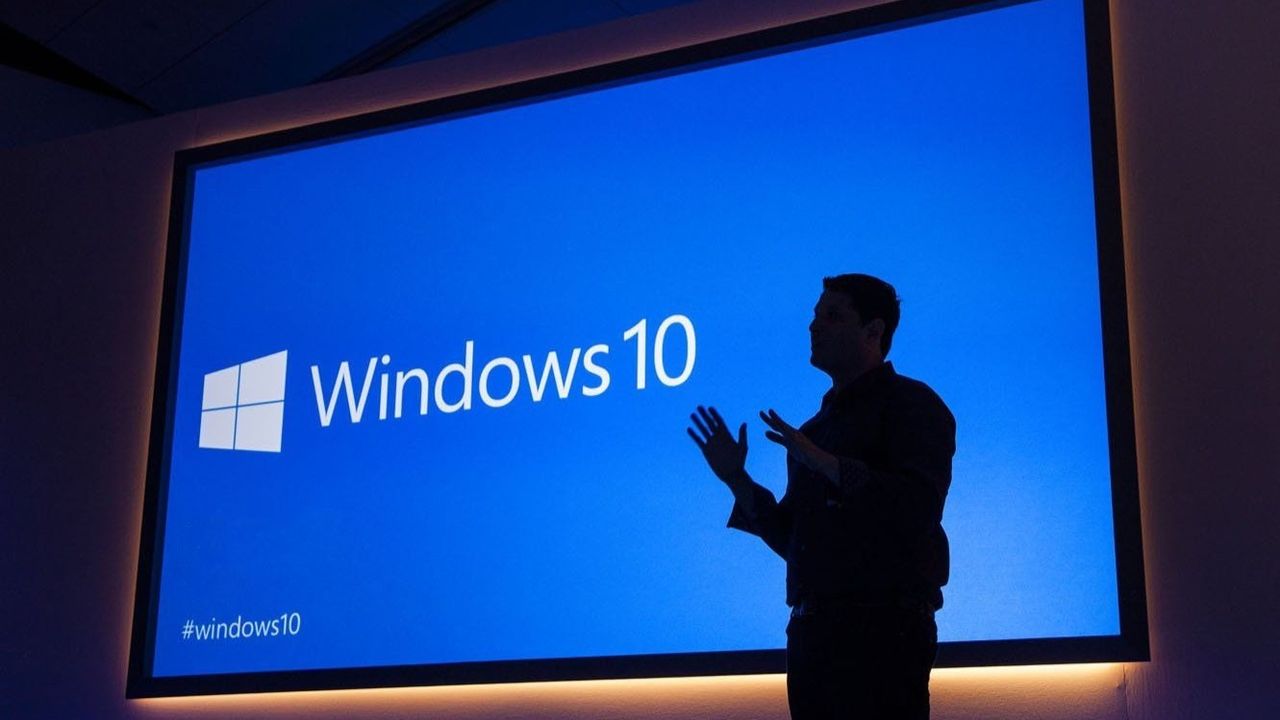
Former Microsoft Executive Vice President Terry Myerson stands in front of a presentation about Windows 10

Former Microsoft Executive Vice President Terry Myerson stands in front of a presentation about Windows 10
Bill Gates says AI may replace a lot of jobs, but it will never replace athletes because no one wants to watch computers play

Over the past few years, we've seen generative AI cement its footprint in the workplace and even take over redundant, repetitive tasks entirely. Last year, Anthropic CEO Dario Amodei claimed that AI was on the verge of slashing up to 50% of entry-level white-collar jobs, making it harder for Gen Z to enter the job market.

Even Microsoft's AI CEO, Mustafa Suleyman, recently cleared up the intent of his statement that AI would eliminate white‑collar jobs in less than 18 months. The executive indicated that the statement was blown out of proportion, further clarifying that he meant AI would augment repetitive, mundane tasks — not replace humans.

In 2025, Microsoft co-founder Bill Gates indicated that AI would replace humans for most things. However, the philanthropic billionaire claimed that it'd be mostly up to humans to decide how they interact with the next-gen technology.

The executive previously indicated that biologists, energy workers, and coders would survive the AI revolution, citing that their complex nature constantly requires human intervention.

Incidentally, Gates may have just identified a fourth profession that could be safe from AI replacementathletes. During an appearance on The Tonight Show with Jimmy Fallon, he suggested that while AI might take over many human tasks, no one would want to watch computers playing baseball (via LADbible Group).

With that in mind, it’s safe to say we’ll continue to savor the moments when our favorite players like Arsenal’s right winger Bukayo Saka grace the pitch with their talent and keep us entertained, even now during the World Cup season.

As AI gains broad adoption and becomes more prevalent, it will undoubtedly reshape how we work or even redefine what the term means. Last year, a study by Microsoft Research highlighted 40 job roles that are at risk of extinction in the age of AI, including customer service representatives, interpreters, technical writers, editors, web developers, and more.

Click to join us on r/WindowsCentral

Join us on Reddit at r/WindowsCentral to share your insights and discuss our latest news, reviews, and more.

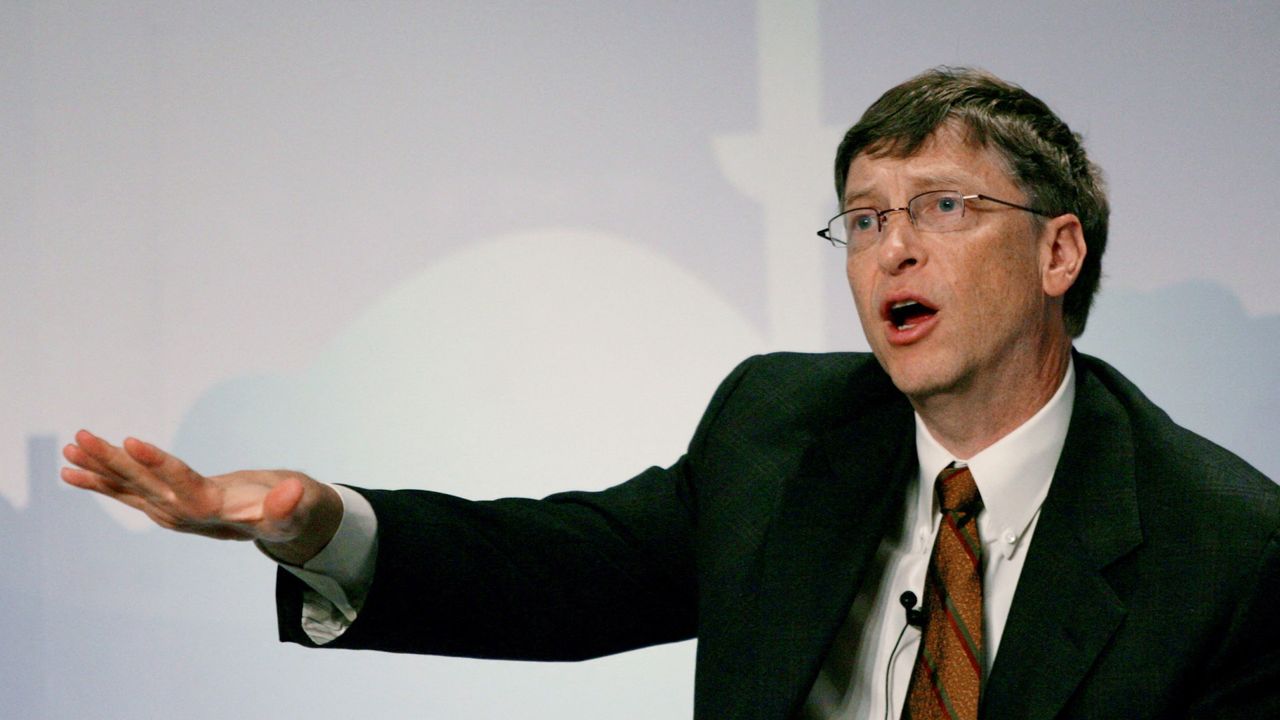
Microsoft co-founder Bill Gates speaks to the press.

Microsoft co-founder Bill Gates speaks to the press.

Microsoft and OpenAI are still playing the fair use card — even as ChatGPT and Copilot fuel the "death knell for local journalism"

Microsoft and OpenAI are no strangers in the corridors of justice, particularly when it comes to copyright infringement disputes. It is well established that advanced AI models such as Microsoft Copilot and ChatGPT rely heavily on vast amounts of online content, including material from outlets like Windows Central, for training purposes.

In court proceedings, Microsoft and OpenAI have consistently argued that copyright law does not explicitly prohibit the use of online content to train AI models. However, with Google racing ahead by embedding AI directly into search, the industry finds itself at a tipping point. As traditional outlets struggle to compete, many are shutting down, leaving thousands of experienced journalists in the lurch.

OpenAI CEO Sam Altman has openly acknowledged that building tools like ChatGPT would be virtually impossible without relying on copyrighted material. That admission now looms large as a coalition of publishers, representing nearly 400 newspapers, has filed a lawsuit against Microsoft and OpenAI in the U.S. District Court for the Southern District of New York, accusing them of copyright infringement (via Bloomberg).

The complaint indicates that the two companies are unlawfully using their content to develop and train the AI chatbots without consent or compensation. According to the complaint:

"Defendants systematically and secretly crawled the Publishers’ websites—including content behind paywalls and other access restrictions—and copied the Publishers’ articles, stories, and other original works onto their own servers without authorization."

The publishers argue that the companies have generated billions from stealing their work and have not paid a dime for it. They are now seeking statutory damages and injunctive relief, citing copyright infringement and violations of the Digital Millennium Copyright Act.

Speaking to Bloomberg, OpenAI spokesperson Drew Pusateri indicated:

“Our models empower innovation, are trained on publicly available data, and are grounded in fair use."

“It would be inequitable if at the end of this you have a resolution that only benefits the largest players in the marketplace and not the people who are doing hard work reporting on things that frankly very few outlets still cover in America today,” former New Jersey Attorney General Matthew Platkin added.

The publishers argue that the AI revolution could be a "death knell for local journalism" if these AI firms aren't held accountable and continue to steal content without compensation.

Elsewhere, a separate 2024 report suggests that AI companies, including Anthropic, Google, and OpenAI, had hit a wall due to a lack of high-quality content for training, which prevented them from developing advanced AI models.

This opens up a broader discussion about the future of AI models if Google is hell-bent on integrating AI into search, after it has practically run every publication into the ground.

The dead internet theory, in particular, comes to mind. It suggests that prolonged exposure of large language models to low-quality training data negatively impacts accuracy, comprehension, and thought process. What's worse is that the phenomenon could only be less than 3 years away if recent studies are anything to go by.

Click to join us on r/WindowsCentral

Join us on Reddit at r/WindowsCentral to share your insights and discuss our latest news, reviews, and more.

ChatGPT and Microsoft Logo

ChatGPT and Microsoft Logo

Satya Nadella says AI should benefit everyone — not just a few powerful firms "eating up the economy”

Microsoft CEO Satya Nadella warned that AI must demonstrate real‑world value or risk losing public support. His comments came amid mounting community backlash over the technology’s heavy demand for electricity and cooling water to power data centers, although Microsoft and NVIDIA have seemingly found a fix.

Speaking to The Wall Street Journal recently, Nadella echoed his earlier stance, stressing that leading players in the AI industry must advance the technology in ways that deliver the greatest public benefit.

There’s growing concern around AI, particularly when it comes to security, privacy, and even its impact on jobs. "You can't say, hey, all white-collar jobs are gone and this could even be a weapon, and we will use all the power to build data centers," Microsoft CEO Satya Nadella noted.

Perhaps more interestingly, the executive called out key investors in the AI landscape who see the technology primarily as a tool to cut jobs and reduce operational costs. He indicated that this would be the wrong way to look at the technology.

Blank Pixel

Instead, he recommended that AI should be viewed as a tool designed to help skilled workers better leverage their capabilities. He further painted a picture where AI tools and human capital co-exist in the same space, a phenomenon he referred to as "token capital."

While the executive claimed that it'd be a recipe for how companies can leverage both AI and workers simultaneously, he admitted that: "it's a lot of change management, it's a lot of displacement, but there is a path."

Nadella indicated that leveraging AI and humans at the same time at work can create a "continuous learning system." He indicated that companies in the future could be characterized by the "tacit knowledge that they contain from both sources."

The executive acknowledged that the idea might face public resistance but emphasized that it would be up to corporations to convince people of the economic opportunities AI could unlock in the future.

Over the past few years, key investors and leaders in the AI landscape have shared several theories, highlighting how the technology could reshape work. Last year, Anthropic CEO Dario Amodei claimed that AI was on the verge of slashing up to 50% of entry-level white-collar jobs, making it harder for the next generation to enter the job market.

No amount of just narrative is going to do it because where we are now, we have to sort of walk the walk. We now have to do the hard work in earning the social permission.

Microsoft CEO, Satya Nadella

Interestingly, Microsoft's AI CEO, Mustafa Suleyman, recently cleared up the intent of his statement that AI would eliminate white‑collar jobs in less than 18 months.

The executive indicated that his statement was widely misconstrued. Rather than replacing humans entirely from work, he indicated that AI would be used to augment repetitive and mundane tasks.

At the same time, Microsoft CEO Satya Nadella wants AI agents to be treated like human employees. It'll be interesting to see how AI is adopted in the workplace, and whether organizations choose to view the technology as a supplement rather than a replacement for the workforce.

Click to join us on r/WindowsCentral

Join us on Reddit at r/WindowsCentral to share your insights and discuss our latest news, reviews, and more.

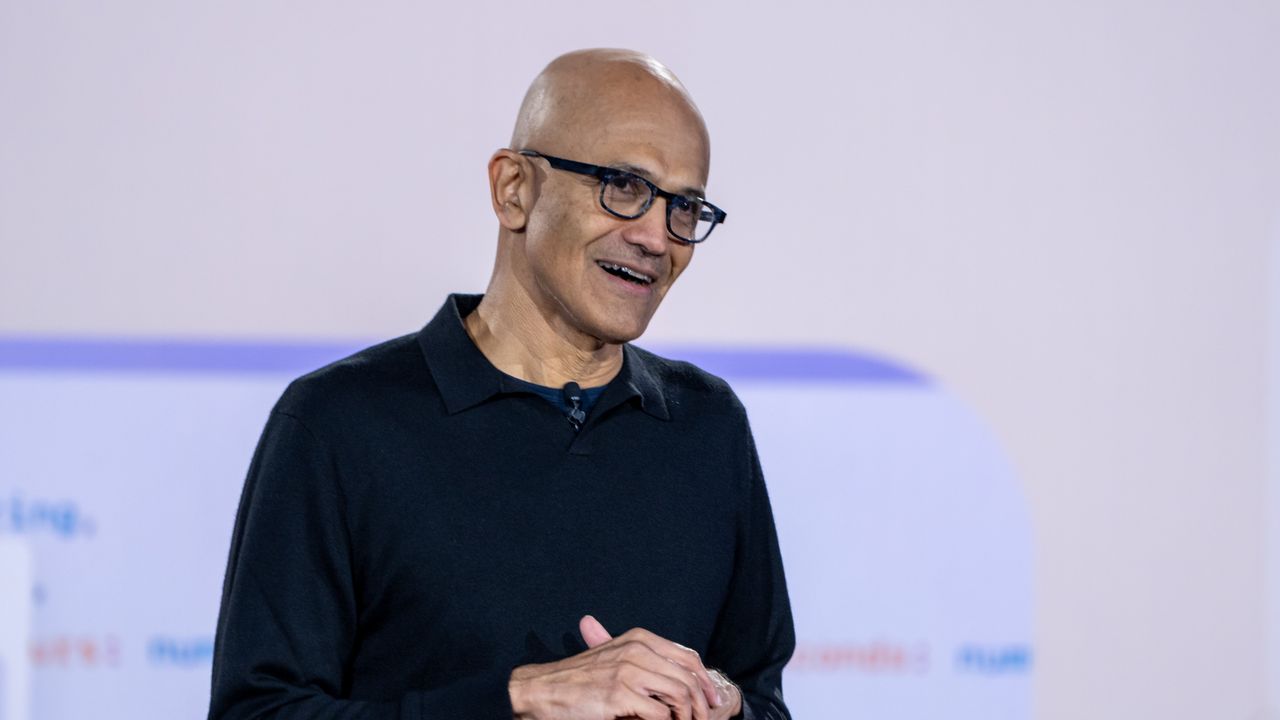
Microsoft CEO Satya Nadella speaks during an event celebrating the 50th Anniversary of Microsoft on April 4, 2025 in Redmond, Washington.

Microsoft CEO Satya Nadella speaks during an event celebrating the 50th Anniversary of Microsoft on April 4, 2025 in Redmond, Washington.

NVIDIA claims its 'next‑gen AI infrastructure' offers a fix for data centers’ insatiable thirst — "The water consumption challenge for data centers is largely solved."

Generative AI has made a significant impact across education, computing, medicine, entertainment, and more. However, all that progress comes with a hefty price tag. The amount of electricity these systems burn through, plus the insane amounts of water needed to keep them cool, is honestly outrageous.

For context, Microsoft and Google's electricity consumption in 2024 surpassed the power usage of over 100 countries. Similarly, OpenAI's GPT-4 AI model consumes up to 3 water bottles to generate 100 words.

Earlier this month, Microsoft shared an interesting concept that may potentially address the water concerns riddling the progression and advancement of AI. CEO Satya Nadella revealed that the tech giant uses a liquid loop in its data centers, which is filled once. As a result, the company's data centers' water consumption has reduced significantly, down to "what a single restaurant would use."

And now it looks like NVIDIA is taking a page from Microsoft’s playbook. Speaking at London Climate Week on Monday, a top executive suggested that water concerns tied to data center development could be addressed through the company's next-generation AI infrastructure.

The executive further disclosed that the company's new next-gen AI infrastructure can be fully cooled with a liquid warm enough to alleviate the need for additional chilling equipment (Axios).

According to NVIDIA's Chief Sustainability Officer, Josh Parker:

"The water consumption challenge for data centers is largely solved."

How does this liquid work? It’s basically a recirculated mix of water and propylene — think automotive antifreeze. It’s worth noting that the system can operate at temperatures up to 113 degrees Fahrenheit.

As such, this allows it to function reliably in hotter environments compared to older systems. In practical terms, data centers equipped with NVIDIA’s next-generation AI infrastructure will require significantly less water and energy for cooling, reducing both operational costs and environmental impact.

This announcement comes at a time when concerns over water and energy use are mounting, as data centers continue to expand into community corridors. Microsoft has seemingly embraced the "Community-First" AI infrastructure, which addresses some of the issues raised by communities themselves, including reducing its water consumption and promising not to increase electricity bills.

Elsewhere, Microsoft’s plan to build a $1 billion data center in Kenya came to an abrupt halt in early May after the government declined to commit to covering the annual capacity costs Microsoft had requested to run Azure in the region. President William Ruto remarked that the facility’s power demands would be so immense that it would effectively require “switching off half the country” to keep it operational.

Click to join us on r/WindowsCentral

Join us on Reddit at r/WindowsCentral to share your insights and discuss our latest news, reviews, and more.

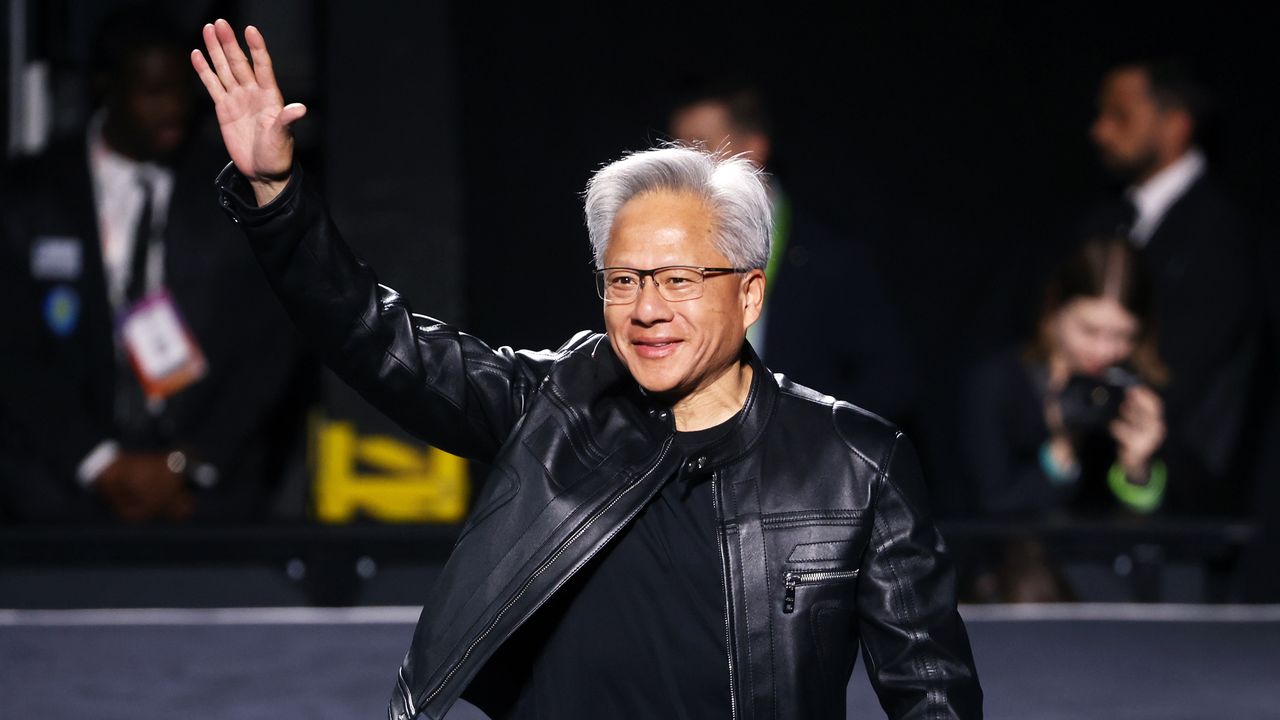
PARIS, FRANCE - JUNE 11: Co-founder and chief executive officer of Nvidia Corp., Jensen Huang attends the 9th edition of the VivaTech trade show at the Parc des Expositions de la Porte de Versailles on June 11, 2025, in Paris. VivaTech, Europe's largest tech trade show, offers a unique digital format for four days of reconnection and recovery through innovation. The event brings together startups, CEOs, investors, technology leaders, and all the digital transformation players shaping the future of the internet. Founded in 2016 by Publicis Groupe and Groupe Les Echos, this annual technology conference, also known as VivaTech, is dedicated to promoting innovation and startups.. (Photo by Chesnot/Getty Images)

PARIS, FRANCE - JUNE 11: Co-founder and chief executive officer of Nvidia Corp., Jensen Huang attends the 9th edition of the VivaTech trade show at the Parc des Expositions de la Porte de Versailles on June 11, 2025, in Paris. VivaTech, Europe's largest tech trade show, offers a unique digital format for four days of reconnection and recovery through innovation. The event brings together startups, CEOs, investors, technology leaders, and all the digital transformation players shaping the future of the internet. Founded in 2016 by Publicis Groupe and Groupe Les Echos, this annual technology conference, also known as VivaTech, is dedicated to promoting innovation and startups.. (Photo by Chesnot/Getty Images)

❌