Vue normale

  • ✇Yanko Design
  • A Bell-Powered Playground for Collective Listening
    French artist Céleste Boursier-Mougenot is widely known for uncovering the musical potential of objects and materials that were never intended to function as instruments. Rather than composing music in a conventional sense, he creates situations in which sound emerges through movement, interaction, chance, and the surrounding environment. His exhibition points de suspension, presented at Frac Normandie in Caen as part of the Normandie Impressionniste Festival, extends this approach across the c
     

A Bell-Powered Playground for Collective Listening

29 juillet 2026 à 18:30

French artist Céleste Boursier-Mougenot is widely known for uncovering the musical potential of objects and materials that were never intended to function as instruments. Rather than composing music in a conventional sense, he creates situations in which sound emerges through movement, interaction, chance, and the surrounding environment. His exhibition points de suspension, presented at Frac Normandie in Caen as part of the Normandie Impressionniste Festival, extends this approach across the cloister and galleries of a former seventeenth-century convent.

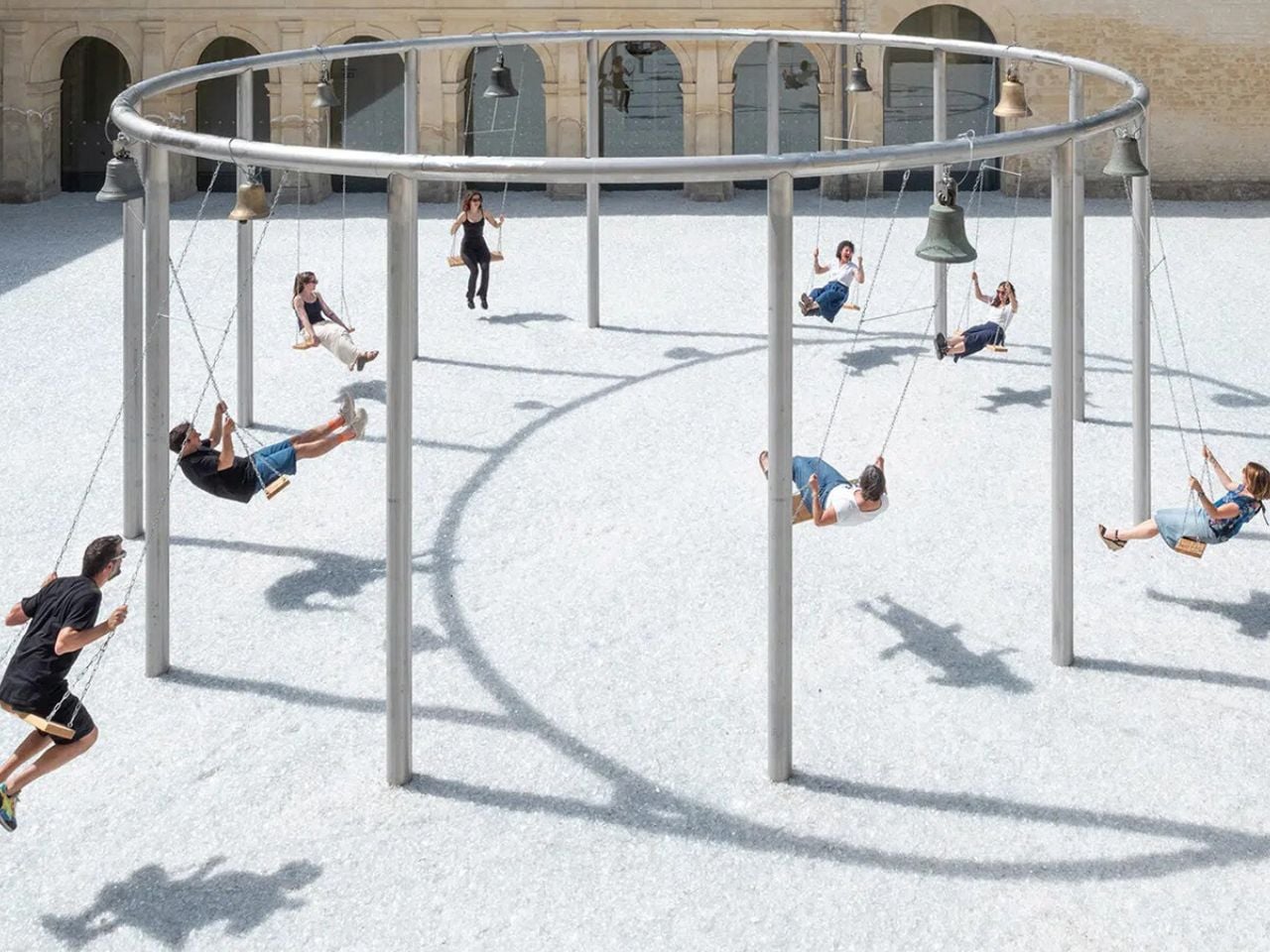
At the center of the courtyard is envolée, a playable musical installation made from swings and antique church bells. A circular steel structure, reminiscent of the bandstands that once animated public gardens, supports eight wooden swings. Above each one hangs a bronze bell of a different size, allowing every swing to produce its own distinct tone when set in motion.

Designer: Céleste Boursier-Mougenot

Visitors are invited to sit, push away from the ground, and activate the installation through the familiar movement of swinging. As the wooden seats rise and fall, the bells respond with changing rhythms and overlapping tones. No two performances can be repeated precisely. The resulting composition depends on how many people participate, how quickly they move, and whether their rhythms align or interrupt one another.

Boursier-Mougenot does not prescribe a melody for the group to perform. Instead, he designs the conditions from which a collective composition can emerge. The work only becomes fully active through the gestures of its participants, temporarily transforming strangers into performers. Individual actions accumulate into a shared sonic environment, allowing visitors to influence one another without needing to speak or coordinate deliberately.

The swing itself introduces another cultural and emotional layer to the installation. Appearing across civilizations as an object of ritual and recreation, it has been associated with ancient Egypt, seasonal festivities, springtime renewal, and the ornamental gardens of seventeenth-century France. It has also been understood as an object marking transitions between childhood and adulthood.

Within envolée, this nostalgic object is reframed as a device for reconsidering how bodies inhabit a public space. Swinging no longer belongs exclusively to childhood. It becomes a method of synchronizing movement, sound, attention, and proximity. The participant is simultaneously a listener, a performer, and an active component within the installation.

Extending beneath the structure is plage, a 900-square-meter field of crushed glass. Its shimmering surface resembles a crystalline body of water, reflecting the architecture, changing light, and movements of the visitors above it. The material produces an intentionally ambiguous landscape: dry yet apparently fluid, solid yet visually unstable. The courtyard of the former convent is consequently transformed into a glittering garden or an abstract lake, where the church bells form an evolving open-air score.

The experience continues inside the galleries with cameraobscura. Here, Boursier-Mougenot enlarges the optical principle of the camera obscura to the scale of an exhibition room. The exterior courtyard and its moving installation are projected upside down across the interior space, creating an immersive, inverted landscape. Suspended swings encourage visitors to pause beneath this reversed horizon, observing the world outside from an unfamiliar perspective.

The ringing bells remain audible indoors, connecting the projected image with the actions taking place outside. Sound shapes the perception of the moving image, while the projected movement gives visual form to the composition being created in the courtyard. Seeing and listening can no longer be understood as separate experiences. Instead, the two installations operate together, collapsing the boundaries between image, sound, architecture, and bodily movement.

Throughout his practice, Boursier-Mougenot draws resonance from ordinary materials and situations. At Frac Normandie, however, the instrument expands beyond the swings and bells to include the convent’s architecture, the reflective glass landscape, the changing light, and the people who temporarily occupy the site.

Points de suspension does more than ask visitors to interact with an artwork. It proposes another way of inhabiting public space—one that values curiosity, play, unplanned encounters, and collective attention. Through a simple act of swinging, visitors are encouraged to remain in the space a little longer, listen to those around them, and participate in a composition that belongs to no single person.

The post A Bell-Powered Playground for Collective Listening first appeared on Yanko Design.
Reçu — 12 mai 2026 Techs Design
  • ✇Yanko Design
  • This Sculptural Glass Object Makes Flowers Feel Like a Van Gogh Painting
    There is something instantly familiar about patterned glass. We have seen it in old windows, cabinet doors, bathroom partitions, and quiet corners of homes where privacy and light needed to exist together. It is a material that usually stays in the background, doing its job quietly. With Violet Frosted, designer Marius Boekhorst brings that overlooked material forward and turns it into something sculptural, expressive, and quietly poetic. At its heart, Violet Frosted is a geometric glass object
     

This Sculptural Glass Object Makes Flowers Feel Like a Van Gogh Painting

11 mai 2026 à 18:30

There is something instantly familiar about patterned glass. We have seen it in old windows, cabinet doors, bathroom partitions, and quiet corners of homes where privacy and light needed to exist together. It is a material that usually stays in the background, doing its job quietly. With Violet Frosted, designer Marius Boekhorst brings that overlooked material forward and turns it into something sculptural, expressive, and quietly poetic.

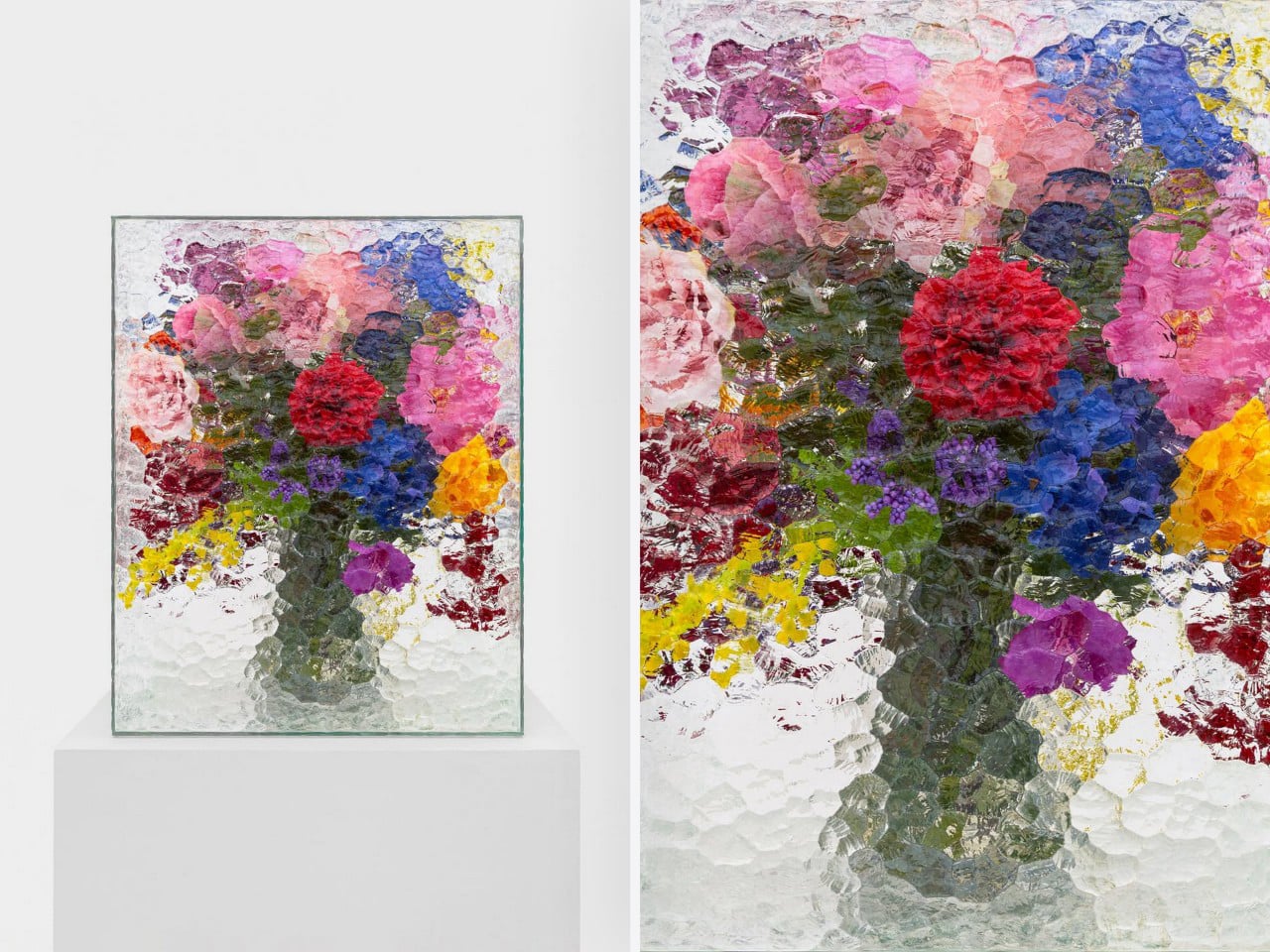
At its heart, Violet Frosted is a geometric glass object that plays with flowers, light, color, and texture. What makes it interesting is the way it changes how we see what is placed behind it. The frosted, patterned glass softens the flowers, turning bright petals and stems into blurred fields of color. A flower becomes a shadow, a brushstroke, a violet glow, or a faded green line depending on where you stand.

Designer: Marius Boekhorst

That is where the charm of the piece begins. Instead of presenting flowers directly, Violet Frosted filters them. It creates a gentle distance between the viewer and the arrangement. That distance makes you look closer. It asks you to slow down and notice how color shifts through glass, how a shape becomes unclear, and how something ordinary can feel painterly when it is partly hidden.

In many ways, Violet Frosted feels like a still life painting brought into the real world. Traditional still lifes capture flowers in one fixed composition, frozen in paint and time. This piece lets the still life move. The flowers change as they bloom and fade. The light changes throughout the day. The view changes as you move around it. From one angle, the arrangement may feel bold and graphic. From another, it becomes soft, quiet, and almost dreamlike.

The design feels especially beautiful because it does not try too hard. It avoids excess decoration. The form is clean and almost architectural, while the patterned glass gives it warmth and character. It feels contemporary without losing the memory of where the material comes from. That balance between old and new gives the piece its quiet confidence.

Violet Frosted also carries a museum-like feeling, though it never feels precious or untouchable. It brings the mood of a gallery into everyday space. A table, shelf, or windowsill suddenly feels more considered. A simple floral arrangement becomes an experience. You are looking at flowers through atmosphere, texture, and light.

Violet Frosted reminds us that design does not need to shout to stay with us. Sometimes, the most memorable objects are the ones that shift how we see familiar things. By turning patterned glass into a living frame, Marius Boekhorst creates a piece that sits between a vase, a sculpture, and a painting. It is functional, emotional, and deeply visual. It holds flowers, and it holds a moment.

The post This Sculptural Glass Object Makes Flowers Feel Like a Van Gogh Painting first appeared on Yanko Design.

  • ✇Yanko Design
  • A Double-Sided Clock That Turns Walls into Living Moments of Time
    Double-sided wall clocks are not new. They have existed for decades, quietly moving between public and private spaces. While many people associate them with railway stations and institutional corridors across Europe, they also made their way into homes in earlier times, often as decorative yet functional pieces in hallways or larger living spaces. Over time, however, they faded out of domestic interiors, replaced by flatter, more minimal wall clocks designed to sit quietly against a surface. Tu
     

A Double-Sided Clock That Turns Walls into Living Moments of Time

7 avril 2026 à 20:30

Double-sided wall clocks are not new. They have existed for decades, quietly moving between public and private spaces. While many people associate them with railway stations and institutional corridors across Europe, they also made their way into homes in earlier times, often as decorative yet functional pieces in hallways or larger living spaces. Over time, however, they faded out of domestic interiors, replaced by flatter, more minimal wall clocks designed to sit quietly against a surface.

Turin-based brand Goofball is bringing this format back, but with a distinctly modern lens. Their Perch clock does not just revive an old idea; it reframes it for how we live today.

Designer: Goofball

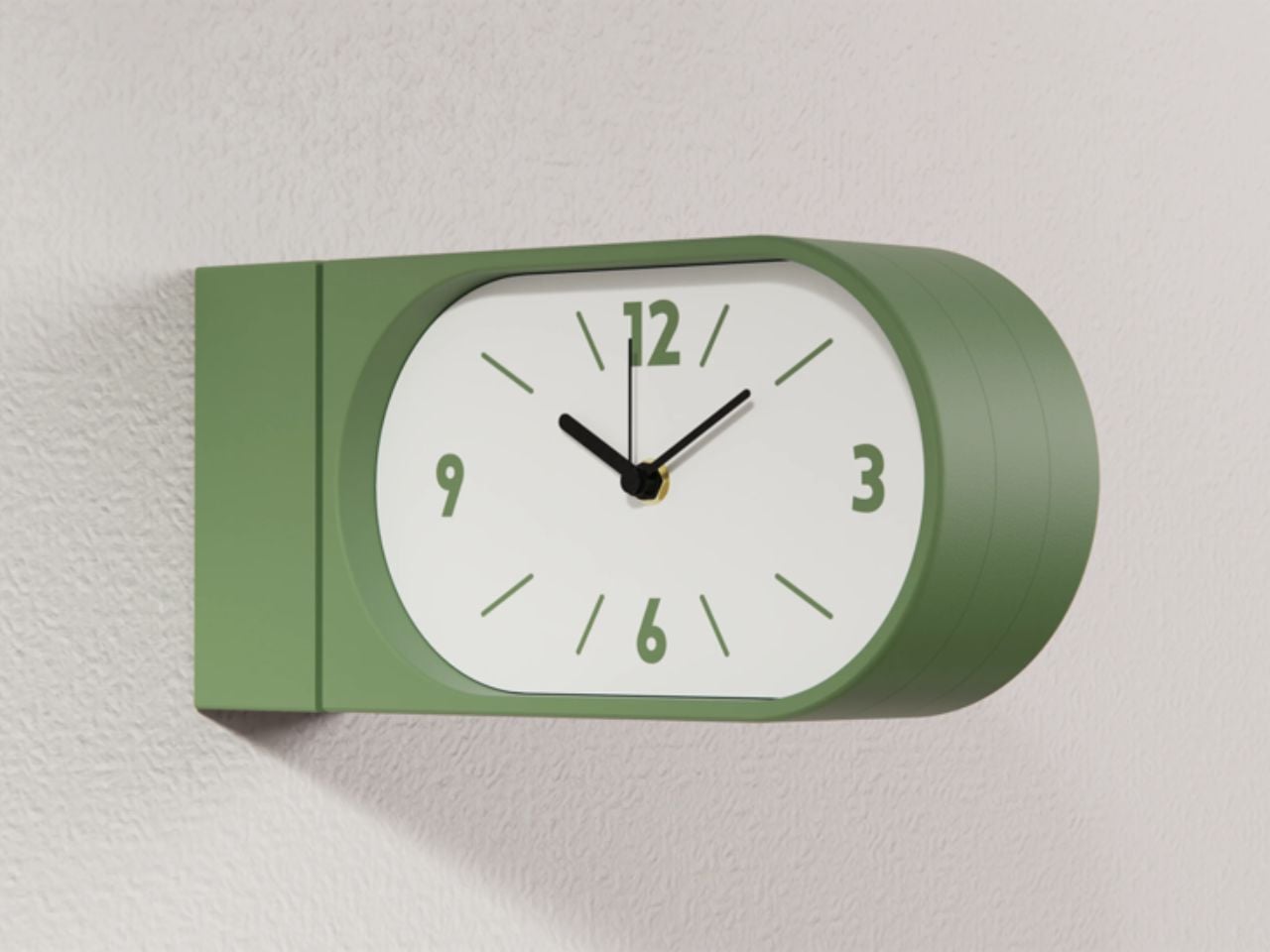
At first glance, the concept feels familiar. A clock that extends out from the wall, visible from both sides. But in a home setting, this simple shift changes everything. Instead of being something you look at from one fixed position, the clock becomes part of how you move through a space. Whether you are walking into a room, passing through a corridor, or glancing back as you leave, time is always within sight. It feels less like an object placed on a wall and more like something integrated into the rhythm of the room.

The functional decisions are just as thoughtful. The clock runs on two AA batteries, which means there is no need for wiring or complicated installation. It hangs on a bracket and can be easily lifted off when the batteries need to be changed. It is the kind of detail that you might not notice immediately, but it makes living with the product feel effortless.

Visually, the Perch clock embraces minimalism in a way that feels warm rather than clinical. It comes in three colors, allowing it to blend into different interiors while still holding its own presence. The design is clean and restrained, making it suitable for contemporary homes, yet it carries a quiet reference to its past. There is something unmistakably reminiscent of old railway clocks, those objects that once defined shared notions of time and movement.

That sense of nostalgia is part of its charm. It brings a subtle character into a space without feeling overly decorative. It introduces depth to a wall, quite literally, and creates a small moment of curiosity. Guests notice it. People interact with it differently. It becomes a conversation piece without trying too hard.

What makes this product particularly compelling is how it challenges a default assumption. We have grown used to thinking of wall clocks as flat, one-directional objects. This design questions the norm and reminds us that even the most familiar objects can be reimagined.

The response so far reflects this shift in perspective. The first batch sold out quickly, suggesting that people are ready for products that feel both nostalgic and new at the same time. Goofball is currently preparing the second batch, expected to be available in the coming weeks.

In the end, this clock is more than just a timekeeping device. It is a small but meaningful intervention in how we experience space. It takes something we already know, brings back its forgotten domestic presence, and gives it a contemporary voice. It does not just sit on a wall. It changes how the wall and the room around it are perceived.

The post A Double-Sided Clock That Turns Walls into Living Moments of Time first appeared on Yanko Design.

  • ✇Yanko Design
  • A Transforming Table-Chair That Turns Tradition into Space-Saving Intelligence
    At a time when living spaces are shrinking while expectations from them continue to expand, this design presents a thoughtful response that is both rooted in tradition and aligned with contemporary needs. Emerging from the context of rising housing pressures in Taiwan, where compact homes are increasingly becoming the norm, the project addresses a fundamental question: how can furniture adapt to limited space without compromising comfort or experience? Rather than treating furniture as static,
     

A Transforming Table-Chair That Turns Tradition into Space-Saving Intelligence

6 avril 2026 à 18:30

At a time when living spaces are shrinking while expectations from them continue to expand, this design presents a thoughtful response that is both rooted in tradition and aligned with contemporary needs.

Emerging from the context of rising housing pressures in Taiwan, where compact homes are increasingly becoming the norm, the project addresses a fundamental question: how can furniture adapt to limited space without compromising comfort or experience? Rather than treating furniture as static, single-purpose objects, the designer reimagines them as dynamic systems capable of transformation.

Designer: Che-Chia Hsu

At the heart of this piece lies a deep engagement with traditional Chinese woodworking techniques, particularly the precision of tenon joints. These joints move beyond being structural solutions and become expressions of calculated craftsmanship, where geometry, material behavior, and human interaction converge. The result is a construction that feels both minimal and robust, relying on accuracy instead of excess.

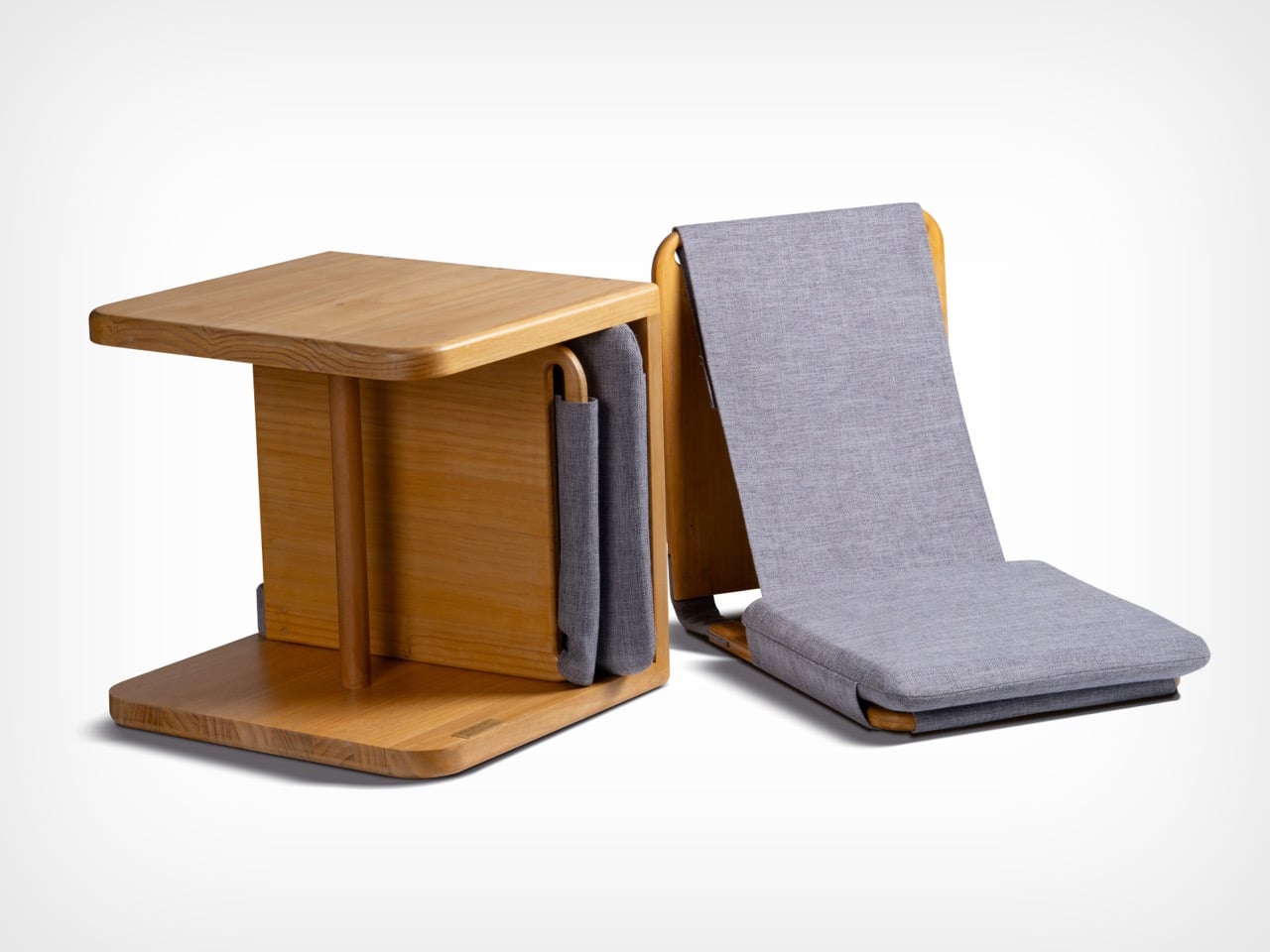
The furniture set is designed to integrate storage and seating within a compact footprint. A chair is concealed within the table and can be pulled out, unfolded, and expanded into a functional seat. The process is intuitive: the chair is extracted, the seat and backrest are opened, and the backrest angle is adjusted using velcro. The transformation is smooth and unobtrusive, allowing the object to shift roles effortlessly.

What distinguishes this design is its reliance on the user’s own body as part of the structural system. Instead of depending entirely on rigid supports, the chair uses the tension generated by the sitter to stabilize the backrest. This introduces a subtle interaction between user and object, where the act of sitting becomes integral to how the design performs. The experience feels efficient, responsive, and quietly intelligent.

Material choices reinforce this balance between function and experience. Lightweight pine wood panels provide durability while ensuring ease of movement. Paired with gray cotton linen fabric, the design introduces a tactile softness that enhances comfort. The fabric is breathable and visually understated, complementing the natural warmth of the wood. Together, these materials create a calm, cohesive aesthetic suited to contemporary interiors.

The development of the project reflects a layered and rigorous process. The designer began by studying traditional joinery techniques through literature, followed by hands-on training under a woodcraft master. This immersion enabled a deeper understanding of the craft beyond theory. Building on this foundation, the designer explored ways to translate these techniques into a modern, functional context through research and experimentation.

What emerges is a design that treats constraint as a starting point rather than a limitation. The piece brings together traditional knowledge and contemporary living patterns, shaping an object that adapts, responds, and participates in everyday use. It reflects a way of designing where space, material, and human interaction are considered together, resulting in furniture that feels considered, purposeful, and in tune with the realities of modern living.

The post A Transforming Table-Chair That Turns Tradition into Space-Saving Intelligence first appeared on Yanko Design.

❌