Vue normale

  • ✇WinCentral
  • Apple iPhone Duo Foldable and iPhone 18 Pro: The Biggest iPhone Upgrades Yet
    Apple is reportedly making a major push into a new era of iPhone design with the introduction of the iPhone Duo foldable, alongside significant camera and performance upgrades for the iPhone 18 Pro and iPhone 18 Pro Max. The iPhone Duo is the headline addition, bringing Apple’s take on a book-style foldable while attempting to […]
     

Apple iPhone Duo Foldable and iPhone 18 Pro: The Biggest iPhone Upgrades Yet

Par : Nisha
10 septembre 2026 à 00:13
Apple is reportedly making a major push into a new era of iPhone design with the introduction of the iPhone Duo foldable, alongside significant camera and performance upgrades for the iPhone 18 Pro and iPhone 18 Pro Max. The iPhone Duo is the headline addition, bringing Apple’s take on a book-style foldable while attempting to […]

Xbox has acquired rights to publish Hideo Kojima's 'PHYSINT' from PlayStation — "We're honored that Kojima-san has chosen to work with Xbox."

In a major coup for Xbox game publishing, Microsoft has landed the contract to publish Physint, Hideo Kojima's long-awaited follow up to Death Stranding.

Despite being announced by PlayStation, somehow, Xbox has managed to acquire the rights to publish Hideo Kojima's return to the "action-espionage" genre. It was all announced just now via Xbox Wire.

Physint in essence sounds like a spiritual successor to Kojima's classic Metal Gear Solid franchise. Metal Gear owner Konami and Hideo Kojima had a high-profile bust-up a few years ago, following the launch of MGSV: The Phantom Pain — which arguably remains unfinished to this day.

Since then, Kojima went independent, developed the award-winning Death Stranding franchise, and later landed a publishing deal with Xbox for horror title OD. Death Stranding 2 is presently a PlayStation exclusive, but the first Death Stranding since launched on Xbox with Xbox Play Anywhere. Later, Kojima re-acquired the rights to Death Stranding from PlayStation itself. It stands to reason Death Stranding 2 will eventually hit Xbox in the future as well.

During the previous announcement two years ago, PlayStation Studios' lead Herman Hulst said that Physint was "part of the PlayStation and Kojima Productions partnership," although that no longer seems to be the path Kojima chose.

“Creators have choices about where and how they bring their ideas to life," Xbox CEO Asha Sharma said in today's blog post. "We’re honored that Kojima-san has chosen XBOX to work with KOJIMA PRODUCTIONS on PHYSINT. His ambition to challenge conventions reflects the kind of creativity we want to support at XBOX."

"This expands our relationship with XBOX beyond OD," said Hideo Kojima. "As we move forward with the development of PHYSINT, we remain committed to redefining the action-espionage genre for players around the world."

Microsoft and Hideo Kojima also said that the two are collaborating across film and television as well, beyond horror title OD. It sounds as though Microsoft is investing a ton into Kojima Productions to bring this partnership to life, although it sounds as though there's some drama that has taken place behind the scenes between Kojima Productions and PlayStation. Physint was announced on the PlayStation stage, so for it to swap hands in such a stark way suggests there's a bigger story at play here.

As confirmed earlier through our official channels, in mid-June of this year, we unexpectedly received notice from PlayStation Studios that they would cancel the PHYSINT project. PHYSINT is an important project both to me personally and to KOJIMA PRODUCTIONS. Determined to keep… pic.twitter.com/rQqhxAnb7NSeptember 10, 2026

In response, Sony has released a statement confirming that it has "made the difficult decision to step away from collaborating with KOJIMA PRODUCTIONS on its project PHYSINT."

An update from PlayStation Studios: After careful consideration, we have made the difficult decision to step away from collaborating with KOJIMA PRODUCTIONS on its project PHYSINT. We continue to have great admiration for Hideo Kojima's vision for the game.Our relationship…September 10, 2026

Either way, it's a fantastic win for Xbox, potentially. Working with such high-profile developers like Hideo Kojima boosts Xbox's visibility with audiences that Microsoft has typically struggled to access. It also feeds into Asha Sharma's strategy of targeting more ambitious AAA projects with trans-media opportunities for TV and movie treatments.

Whether it all lands remains to be seen, but man oh man, this is NOT one I saw coming.

Click to join us on r/WindowsCentral

Join us on Reddit at r/WindowsCentral to share your insights and discuss our latest news, reviews, and more.

  • ✇Yanko Design
  • Come for the Cut, Stay for the Click: The DeckShiv Neo Delivers Both
    Most utility knives are tools you forget about until you need one. The DeckShiv Neo is the one you reach for when you don’t. Rather than just existing purely to get a job done, like slicing open a box or trimming a stray thread, the DeckShiv Neo has a purpose long after you finish the task at hand. It’s a compact utility knife built around the moments when there’s nothing to cut at all, just a satisfying magnetic slide that clicks home every time you push it. That feeling comes from a three-par
     

Come for the Cut, Stay for the Click: The DeckShiv Neo Delivers Both

Par : JC Torres
9 septembre 2026 à 21:45

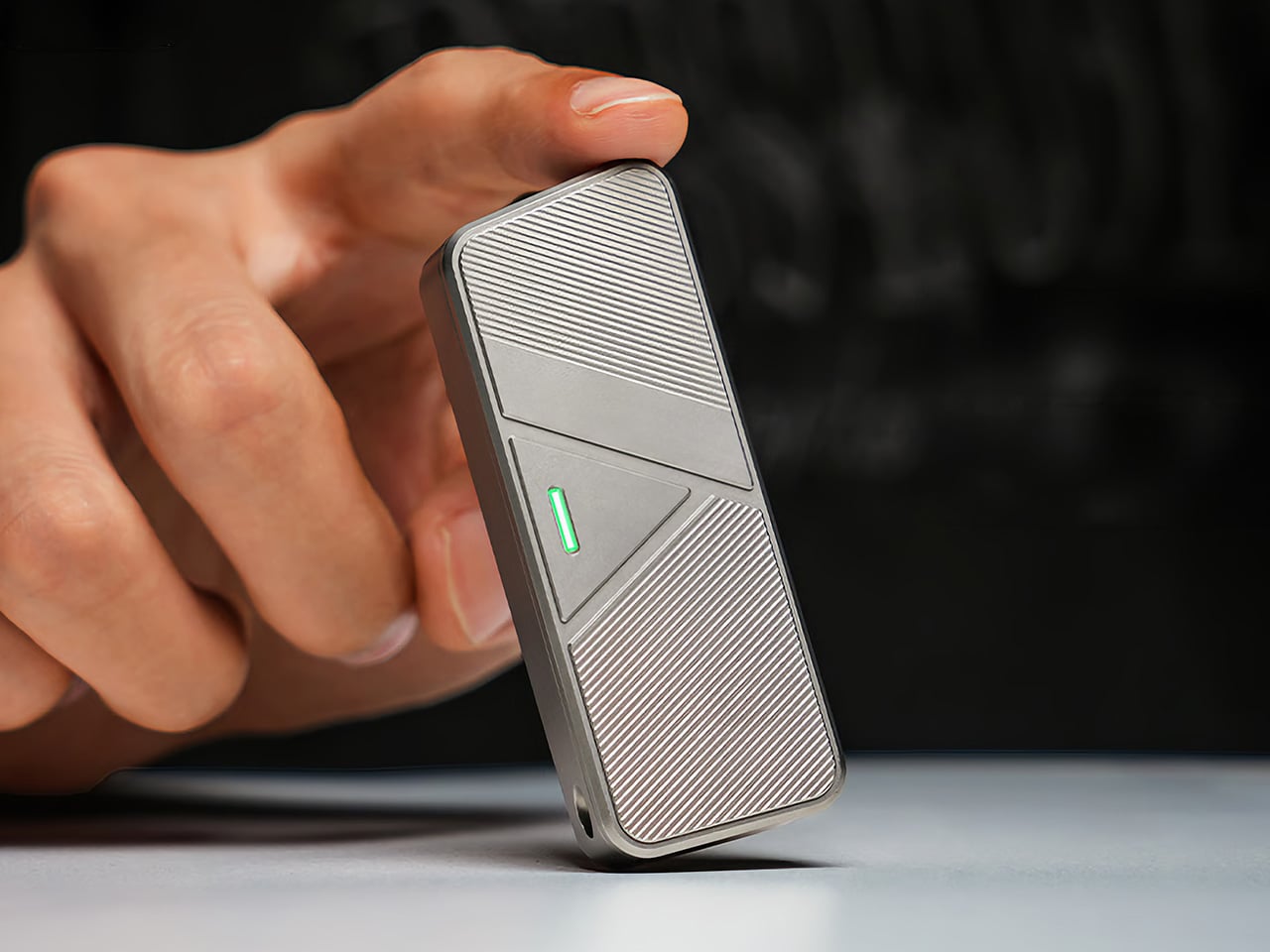
Most utility knives are tools you forget about until you need one. The DeckShiv Neo is the one you reach for when you don’t. Rather than just existing purely to get a job done, like slicing open a box or trimming a stray thread, the DeckShiv Neo has a purpose long after you finish the task at hand. It’s a compact utility knife built around the moments when there’s nothing to cut at all, just a satisfying magnetic slide that clicks home every time you push it.

That feeling comes from a three-part motion the brand calls the Push: travel, resistance, and return. Slide it forward, feel resistance build under your thumb, then let it snap cleanly back. The DeckShiv Neo adds 0.26 inches of extra travel over the original, just enough room for that resistance to develop without turning the motion into work. It’s a tiny change, but it’s the whole point.

Designer: ACTMAX Design Team

Click Here to Buy Now: $49 $79 ($30 off). Hurry, only a few left! Raised over $51,000.

Underneath that motion sits a reworked internal system built from four N52 magnets, two tucked inside the body and two more inside the slider cover. They add resistance as you push, then guide the slider back once you let go. A solid, CNC-machined brass rail also replaces the thin shim used before, giving the mechanism a guided path instead of loose surface contact.

There’s also a Pin and Stop Pin system tucked inside, which sounds technical but solves a simple problem: knowing exactly when the slide is finished moving. Push it all the way, and it stops firmly, with no mushy give or extra wiggle room. That crisp finish is part of why the motion feels complete every time, not just smooth in the middle.

The DeckShiv Neo’s surface plays a role, too. A fine, bidirectional texture is machined into the body so your thumb finds grip whether you’re pushing forward or letting it slide back, and it works the same whether you’re left- or right-handed. Every corner is chamfered, and every transition smoothed over, so the knife stays comfortable to hold no matter how many times you’ve already picked it up.

When there’s actually something to cut, whether it’s a stubborn shipping box, packing tape, or a swatch of leather, the Neo handles it with a 15-degree asymmetric blade opening that exposes about 0.95 inches of edge, roughly 26% more than before. That extra visibility keeps the cutting line in clear view, letting you guide the blade with more precision instead of guessing where it actually is.

The blade itself is a standard SK5 utility blade, the same kind you’d find at any hardware store, not some proprietary cartridge that locks you into overpriced refills. Two N52 magnets hold it firmly in place, backed by a mechanical stop that keeps it from shifting in use. Once it dulls, swapping in a fresh one takes seconds and barely costs anything.

The DeckShiv Neo is also about 20% thinner than its predecessor, measuring roughly 2.9 by 2.7 by 0.51 inches, small enough to disappear into a pocket without printing through your jeans. A one-piece deep-carry clip keeps it riding low and steady, and it comes off entirely if you’d rather clip it elsewhere or thread it through the built-in lanyard point instead, whichever suits how you carry things.

The body comes in Grade 5 titanium, aluminum, or PEI, and the choice changes more than the color. Titanium feels dense and grounded, giving each push a deliberate, mechanical quality. Aluminum feels crisper and lighter, quicker to respond under your thumb. PEI runs warmer to the touch, with a softer, more playful character. Same mechanism inside, three distinct personalities depending on what your hand prefers.

There’s one more quiet touch worth mentioning: an optional tritium vial slot that glows on its own for up to 25 years, with no batteries or charging involved. It’s a small, personal detail rather than a flashy one, fitting for a compact companion you’ll reach for out of habit, whether or not you need to cut much of anything that day.

What makes Neo different isn’t the titanium or the magnets. It’s the fact that you’ll push it for no reason at all, and that’s exactly the point. It’s a tool that cuts when you need it, but you’ll reach for it long after the boxes are opened. You’ll buy it for the cut. You’ll keep it for the click.

Click Here to Buy Now: $49 $79 ($30 off). Hurry, only a few left! Raised over $51,000.

The post Come for the Cut, Stay for the Click: The DeckShiv Neo Delivers Both first appeared on Yanko Design.

  • ✇Yanko Design
  • This Porsche 911 was lifted and rebuilt into a Chicago-ready urban safari car
    What happens when a Porsche 911 stops worrying about staying low to the ground? Tangent Design Group has an answer. Lift it three inches, widen its stance, add chunky off-road tires, and turn one of Stuttgart’s most recognizable sports cars into something that looks ready to escape the city rather than attack a racetrack. Built in Chicago, the Urban Safari 911 is an unusual exercise in rethinking what a modern Porsche can be. The project began in 2019, when the Chicago-based industrial design s
     

This Porsche 911 was lifted and rebuilt into a Chicago-ready urban safari car

9 septembre 2026 à 20:30

What happens when a Porsche 911 stops worrying about staying low to the ground? Tangent Design Group has an answer. Lift it three inches, widen its stance, add chunky off-road tires, and turn one of Stuttgart’s most recognizable sports cars into something that looks ready to escape the city rather than attack a racetrack. Built in Chicago, the Urban Safari 911 is an unusual exercise in rethinking what a modern Porsche can be.

The project began in 2019, when the Chicago-based industrial design studio decided to build a Porsche without the constraints of a conventional client brief. Tangent eventually started with a 2021 Porsche 911 Carrera 4, chosen for its all-wheel-drive platform. Finished in Porsche’s Paint-to-Sample Black Olive with a tan interior, the car already had a distinctive character before the transformation began.

Designer: Tangent Design Group

Tangent approached it like a product-development exercise. The original 992 was digitally scanned, including its bumpers, fenders, wheel wells, rocker panels, and rear engine cover. That data became the foundation for developing new components that could properly integrate with the factory body and its increasingly complex electronics. Full-scale parts were then 3D-printed and physically fitted to the car to refine proportions and attachment points before final production.

The most significant change sits underneath the body. Tangent developed a bespoke three-inch lift system while retaining the Porsche’s stock suspension architecture and avoiding software errors. The additional clearance makes room for larger off-road tires and fundamentally changes the stance of the 911. On a truck, three inches might be unremarkable; on a low-slung sports car, it transforms the proportions completely. Something similar to what Vagabund Moto did in collaboration with NINE ELEVEN OUTLAW and DakarGarage to transform a Porsche 924 S into an off-road-worthy ride.

The wheels received the same level of attention. Tangent designed them in-house and worked with Brixton Forged to produce bespoke forged aluminum wheels. Full-scale printed versions were used during development to judge how the design sat against the widened body before the final wheels were manufactured. Visually, the Urban Safari combines wide fender extensions, revised rocker panels, a custom front bull bar and a pronounced ducktail-style rear wing. Auxiliary lighting and roof-mounted adventure equipment reinforce its rally-inspired character, while the graphics package borrows from historic Porsche rally liveries without simply recreating one.

That distinction is important. Tangent’s project predates Porsche’s factory 911 Dakar, having been conceived in 2019, but it draws from the same broader history of Porsche competition cars built for surfaces far removed from a racetrack. Instead of copying a classic rally car or dressing the 992 in retro cues, Tangent has created something that feels contemporary and purpose-built.

The result is currently a one-off, but Tangent is accepting inquiries about the Urban Safari kit, leaving open the possibility that its design language could eventually find its way onto other 992-generation cars.


The post This Porsche 911 was lifted and rebuilt into a Chicago-ready urban safari car first appeared on Yanko Design.

  • ✇Yanko Design
  • Never Lose Your Keys Again With a Tracker That Glows in the Dark
    For forgetful people like me, trackers have basically become a must-have. Whether you’re clipping one onto your wallet, your car keys, your backpack, or whatever it is you absolutely cannot afford to lose, these little devices help you do exactly what they promise: keep track. The only catch is that a lot of trackers tend to look alike, and if you’re relying on appearance alone instead of the connected app, it’s easy to accidentally grab the wrong one. If you’re after a tracker that actually st
     

Never Lose Your Keys Again With a Tracker That Glows in the Dark

9 septembre 2026 à 18:30

For forgetful people like me, trackers have basically become a must-have. Whether you’re clipping one onto your wallet, your car keys, your backpack, or whatever it is you absolutely cannot afford to lose, these little devices help you do exactly what they promise: keep track. The only catch is that a lot of trackers tend to look alike, and if you’re relying on appearance alone instead of the connected app, it’s easy to accidentally grab the wrong one.

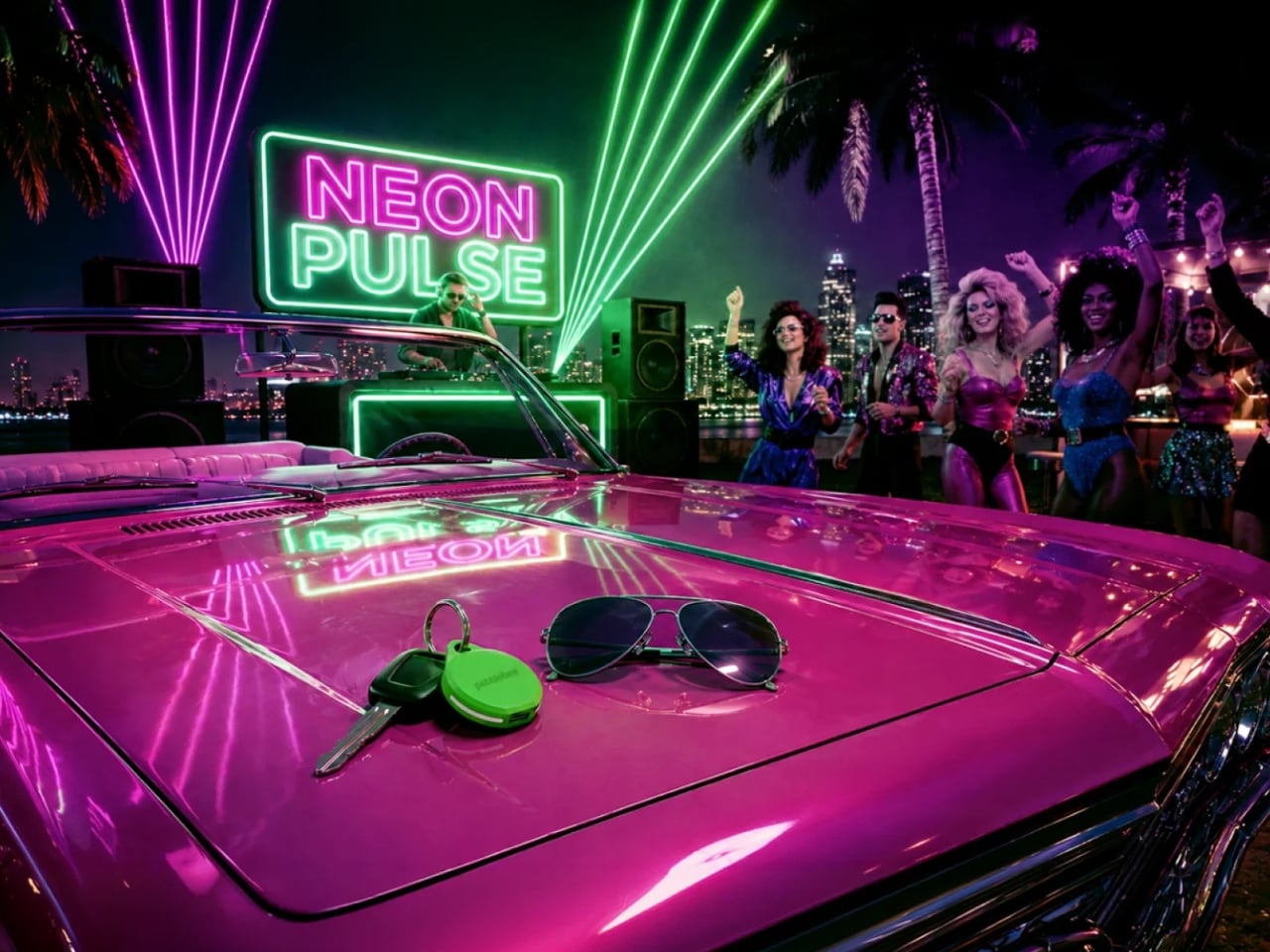
If you’re after a tracker that actually stands out, and one that can even glow in the dark, Pebblebee’s latest Evercolor drop might be exactly what you need. Evercolor is the brand’s limited-edition color program built exclusively for its Clip 5 tracker, and the newest release, called Neon Pulse, comes in two eye-catching shades: Techno Lime and Hotline Pink. Pebblebee describes the collection as perfect for “bold self-expression and a fresh-season reset,” and honestly, it’s hard to disagree.

Designer: Pebblebee

Evercolor has rolled out plenty of standout colors before, but Neon Pulse marks the first time the program has added glow-in-the-dark accents. That means your tracker stays visible even after its LED switches off, so you’re not just relying on the app to tell you where your item is. You can actually spot it in the dark, as long as it’s somewhere within eyesight.

Keep in mind that this is a limited-edition release, so if hot pink and neon green happen to be your colors, you’ll want to grab them soon. Pebblebee rolls out new Evercolor shades every twelve weeks, and once a drop sells out, it’s gone for good, no restocks. Previous collections like Freeze Frame and Heatwave Hijinks have already sold out, so if Neon Pulse catches your eye, don’t wait too long to add it to your cart.

Underneath all that color, though, it’s still the same reliable Clip 5 that Pebblebee originally released. It works with both Apple and Android devices, so you don’t have to worry about switching phones down the line. The rechargeable battery lasts up to a year on a single USB-C charge, which means no more digging through drawers for spare coin batteries. It also boasts a direct Bluetooth range of about 500 feet, roughly double what a lot of competitors offer, plus access to a global crowd-network for finding your stuff even farther away. On top of that, you get a 130dB siren, a bright LED strobe, and IP66 water resistance, so it can handle a little rain or an accidental splash without missing a beat.

It’s also worth noting that Neon Pulse still costs the same $34.99 as the standard Clip 5, so you’re not paying extra just for the fresh colorway. There’s also a free built-in safety feature called Alert, which can notify you if an unfamiliar tracker seems to be following you, a nice bit of peace of mind on top of everything else. Design-wise, the compact clip-on shape makes it look less like a tech gadget and more like an accessory for your bag, wallet, or keychain. Add in the bright, playful colorway, and it becomes even more fashionable, dare we say, kind of cool. So if your main complaint about trackers has always been that they all look the same, Neon Pulse is built to solve exactly that problem.

At the end of the day, a tracker is only useful if you can actually tell it apart from the pile of identical black and white gadgets everyone else seems to own, and if you enjoy using it enough to keep it clipped on in the first place. Pebblebee’s Neon Pulse drop checks both boxes, combining genuine utility with a design that feels personal rather than generic. Whether you’re the type who loses your keys weekly or you just want your tech to match your personality, this drop is worth a look before it disappears for good. And if pink and green aren’t quite your vibe, it might be worth keeping an eye on Pebblebee’s page anyway. With a new Evercolor drop landing every twelve weeks, there’s a good chance your perfect color combo is just around the corner.

The post Never Lose Your Keys Again With a Tracker That Glows in the Dark first appeared on Yanko Design.

  • ✇Yanko Design
  • A Chilean Architect Quietly Built a House That Follows the Hill Instead of Fighting It
    House 22, designed by Chilean studio Loft7 and completed in 2023, sits on a sloping coastal lot south of Punta de Lobos — a stretch of Chilean coastline known for dramatic surf and untouched native scrubland. The lot descends toward the northwest, and rather than resisting that gradient, the architecture follows it, letting the terrain pull the building naturally toward an uninterrupted view of the Pacific Ocean. At 320 square meters, the residence is generous without being excessive. Loft7 str
     

A Chilean Architect Quietly Built a House That Follows the Hill Instead of Fighting It

9 septembre 2026 à 18:30

House 22, designed by Chilean studio Loft7 and completed in 2023, sits on a sloping coastal lot south of Punta de Lobos — a stretch of Chilean coastline known for dramatic surf and untouched native scrubland. The lot descends toward the northwest, and rather than resisting that gradient, the architecture follows it, letting the terrain pull the building naturally toward an uninterrupted view of the Pacific Ocean.

At 320 square meters, the residence is generous without being excessive. Loft7 structured the build using a combination of reinforced concrete and steel frames — a technical pairing that allows the house to hold its ground on a challenging slope while keeping the interior language warm and tactile. Exposed timber beams run through the living spaces, the dining area, and the kitchen, grounding each room in material honesty. There’s no attempt to disguise how the building is put together. That transparency is the design.

Designer: Loft7

What makes House 22 worth studying isn’t a single dramatic gesture — it’s restraint applied consistently. The interiors lean on wood, natural light, and sightlines that always resolve at the ocean. No surface fights for attention. The beam grid overhead becomes rhythm rather than decoration, and the open-plan social spaces feel like they’re orientated by the view rather than by a floor plan. Spaces breathe because the architecture got out of the way.

Pichilemu is famous in surfing circles, but architecturally it’s a place where the Chilean coast has quietly been producing some of the country’s most considered residential work. Loft7 fits that lineage — a studio that has built its reputation around sites where nature already has the upper hand. Their approach with Casa 22 trusts the land and the light, deploying materials that age well in a coastal climate and a massing that reads modestly from the outside while delivering on every expectation from within.

Photographed by Fabián Acuña, the project looks different at every hour of the day. Morning light hits the timber and fills the interiors with warmth; the Pacific turns silver in the afternoon. That relationship between material, orientation, and time of day is never accidental in good coastal architecture — and here it feels entirely intentional. House 22 isn’t trying to be the loudest house on the Chilean coast. It’s trying to be the most honest one. On both counts, Loft7 delivers.

The post A Chilean Architect Quietly Built a House That Follows the Hill Instead of Fighting It first appeared on Yanko Design.

  • ✇Yanko Design
  • Your iPhone’s Portrait Mode Was Fake for a Decade – The iPhone 18 Pro Changes That With A Real Aperture
    Would you be shocked to hear that the “Portrait Mode” on your iPhone all these years was ‘fake’? Well, it’s real as in the background is actually blurred, but it isn’t blurred because the camera captured it that way, it’s all been software trickery for the past decade… until now. Six laser cut blades, each thinner than a human hair, are about to change that. The iPhone 18 Pro’s new main camera can physically open and close its lens for the first time in iPhone history, and that single mechanica
     

Your iPhone’s Portrait Mode Was Fake for a Decade – The iPhone 18 Pro Changes That With A Real Aperture

9 septembre 2026 à 18:30

Would you be shocked to hear that the “Portrait Mode” on your iPhone all these years was ‘fake’? Well, it’s real as in the background is actually blurred, but it isn’t blurred because the camera captured it that way, it’s all been software trickery for the past decade… until now. Six laser cut blades, each thinner than a human hair, are about to change that. The iPhone 18 Pro’s new main camera can physically open and close its lens for the first time in iPhone history, and that single mechanical change rewrites how the blur behind your subject actually gets made.

Here’s the quick version of how Portrait Mode has worked since 2016. Your iPhone takes the shot, uses a second lens or depth data to figure out roughly where you end and the background begins, then runs software over the image to blur everything behind that outline. It’s a clever guess dressed up as photography, and it’s why hair strands sometimes disappear into a smudge or a stray earring gets blurred along with the wall behind it. The new aperture system skips the guessing entirely. The lens itself controls how much of the scene stays sharp, the same way it’s always worked on a real camera.

Designer: Apple

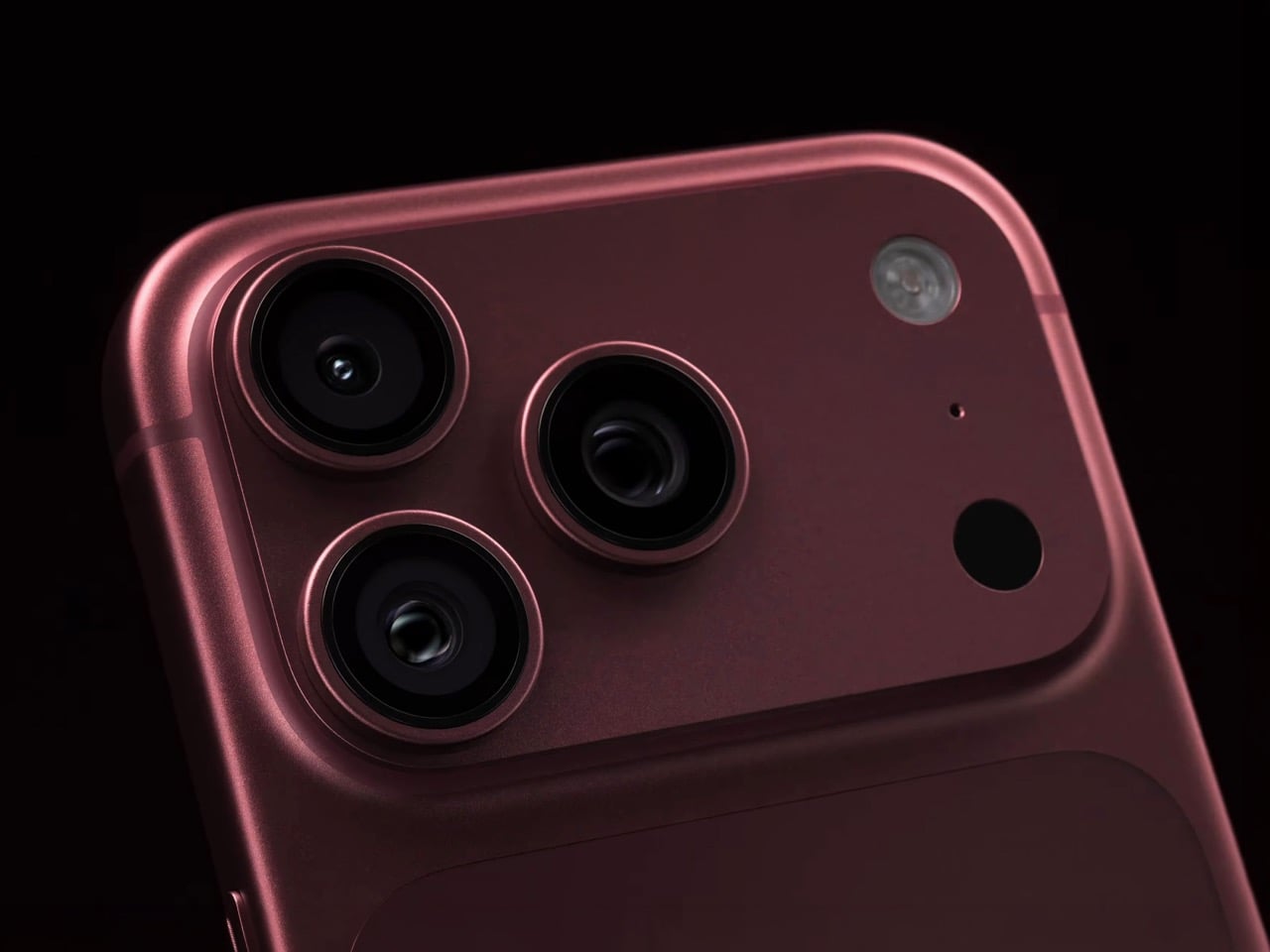
So how does a phone this thin pull off something that usually needs a chunky lens barrel? Apple built a system of six laser cut blades, each one thinner than a strand of hair, arranged around the main lens and moved by a tiny rotor mechanism. Together they shift the aperture through four stops, all the way down to f/1.48, with the camera defaulting to a f/1.8 for everyday portraits and opening or closing automatically depending on what it’s looking at. In low light it opens wider to pull in around 50 percent more light, which should mean cleaner night shots and sharper astrophotography without cranking up the ISO and adding grain.

Because this is optical now instead of computational, the depth falls off the way it would on an actual camera lens. Hair, glasses, jewelry, the fine stuff that always tripped up the old software blur, should render properly instead of getting smeared into the background by accident. Close the aperture down and you get more of the scene in focus for group shots, which is the same tradeoff photographers have been making with real cameras for a century. It’s just that now your phone gets to make that tradeoff too.

Apple didn’t stop at making the hardware smarter, it also handed a lot of that control directly to you. The redesigned camera app now includes Pro Controls, letting you manually pick one of the four aperture settings yourself, check exposure with an actual histogram, dial in white balance, and adjust shutter speed for motion blur or freeze frame shots. Third party camera apps are getting access to the same aperture system through an updated API, so this isn’t going to stay locked inside Apple’s own app for long. Photography folks who like getting hands on with their settings finally have a real reason to poke around the camera app instead of leaving everything on auto.

The upgrade carries over into video too. Cinematic mode effects can now be applied after you’ve already shot the footage, and it supports 60fps for smoother half speed slow motion. Time-lapse jumps to 4K with Dolby Vision HDR. None of that depends directly on the aperture blades, but it’s part of the same larger push this year to hand serious creative control to people who just want to point their phone and shoot something that looks intentional.

All of this sits inside a redesigned Pro body that now uses color matched aluminum and back glass, available in Black, Silver, the new Glacier, and a genuinely gorgeous Burgundy that photographs beautifully next to the camera module. The iPhone 18 Pro starts at $1,199 and the Pro Max at $1,299, both up for preorder September 12 and shipping September 18. For a feature that lives entirely inside a few hair thin blades you’ll never actually see moving, it might end up being the most noticeable camera change Apple has made in years.

The post Your iPhone’s Portrait Mode Was Fake for a Decade – The iPhone 18 Pro Changes That With A Real Aperture first appeared on Yanko Design.

  • ✇Yanko Design
  • Apple’s Coolest Watch Feature Has Nothing To Do With Health… It Lets You Rewind Time.
    “Could you come again?” “Pardon?” “Huh?” “Wait, say that one more time?” These are examples of phrases that make you seem dumber than you really are. Nothing destroys aura more than unironically asking someone to repeat something they said because A. you weren’t listening, or B. you were but just didn’t happen to comprehend what they were saying. Apple has a solution for that, and it’s wrapped up in their latest smartwatch. The new Live Rewind feature, powered by Apple’s new S11 chip, allows yo
     

Apple’s Coolest Watch Feature Has Nothing To Do With Health… It Lets You Rewind Time.

9 septembre 2026 à 16:30

“Could you come again?” “Pardon?” “Huh?” “Wait, say that one more time?” These are examples of phrases that make you seem dumber than you really are. Nothing destroys aura more than unironically asking someone to repeat something they said because A. you weren’t listening, or B. you were but just didn’t happen to comprehend what they were saying. Apple has a solution for that, and it’s wrapped up in their latest smartwatch. The new Live Rewind feature, powered by Apple’s new S11 chip, allows you to instantly transcribe the past 15 seconds of any conversation and read its chat logs. Press the digital crown on the new Watch twice, and you pretty much get ‘subtitles’ for the past 15 seconds, so you don’t have to “excuse me” your way into a repetition.

Your watch, just like your phone, earbuds, smart speaker, and smart home hub, is always listening. It’s waiting for the magic words “Hey Siri” or Alexa, or Google depending on which ecosystem you’re tied into. The point is, it’s always listening, so Apple simply created a way to package that into a feature that feels impressive rather than invasive. Think of how a dashcam can auto-log the past 3 minutes of video AFTER an accident occurs (using a feature called loop recording), Apple just brought that to your watch, packaged as a part of its new Audio Intelligence suite of features. Impressive, no?

Designer: Apple

Once you’ve got the transcript, you can ask Siri about it directly, or save it into the new Siri app to dig up later. Say your coworker rattles off a Wi-Fi password or a colleague mentions a book recommendation mid-hallway chat. Instead of fumbling for your phone, you catch it on your wrist and move on. Apple says none of this gets recorded in the traditional sense. Audio flows into a secure buffer inside the S11’s Secure Exclave, a hardware compartment isolated from the rest of the system, and once the transcript is generated, the raw audio is gone. No file, no clip, nothing to subpoena, because nothing exists.

Sitting next to Live Rewind is Siri Recap, which does the same basic trick but for an entire conversation instead of a 15 second clip. Turn it on before a meeting or a parent teacher conference, and Apple Intelligence quietly builds a title, a summary, and a list of key points you can review afterward in the Siri app. You control the boundaries here more than you’d expect. Leave it running all day, schedule it for work hours only, or flip it off entirely from Control Center whenever the conversation turns private. Summaries auto delete after seven days unless you save them, and saved ones sync end to end encrypted, so not even Apple can read them back.

Audio Intelligence isn’t just built for eavesdropping on your own life. Sound Recognition listens for sirens, alarms, doorbells, and crying babies, then buzzes your wrist even when your phone is nowhere nearby, which makes it a genuinely useful accessibility tool for anyone who is deaf or hard of hearing. Shazam gets folded in too, sitting in the Smart Stack and naming whatever song is playing around you without you having to pull out a phone. Four features, one microphone, and one chip doing the quiet work behind all of them.

Both Live Rewind and Siri Recap need Siri AI to function, and Siri AI is still in beta, so expect this to roll out gradually starting in English before other languages follow. You’ll also need an iPhone 16 or newer paired to the Watch, so the 16e and anything older is out of luck. Apple Watch Series 12 itself starts at $399, is available for preorder today, and ships September 18. The health sensors got a real upgrade this generation too, but for once, that isn’t the headline. The mic is.

The post Apple’s Coolest Watch Feature Has Nothing To Do With Health… It Lets You Rewind Time. first appeared on Yanko Design.

Hausse de prix des processeurs Intel pour PC : augmentation de 10% à prévoir en octobre 2026

9 septembre 2026 à 16:20
Le géant des semi-conducteurs Intel s'apprête à augmenter de 10 % les tarifs de ses processeurs pour ordinateurs portables et de bureau le 5 octobre 2026. Cette mesure stratégique majeure vise à restaurer d'urgence la rentabilité financière de la multinationale face à un marché mondial du PC en plein...

Kingdom Hearts 4 : une fuite Steam aurait dévoilé de gros indices sur le jeu, c'est un cauchemar…

9 septembre 2026 à 15:40
Ce n’est pas la première fois que Steam, la plateforme de Valve, est mise en cause dans le cadre d’une importante fuite de données et d’informations sur des titres à paraître… ou encore non annoncés ! Récemment, plusieurs dizaines de productions en ont fait les frais, dont Kingdom Hearts 4. Pour cause,...

  • ✇Yanko Design
  • The iPhone Duo just killed the Dynamic Island, the SIM tray, and the demand for an iPad Mini
    Spare a thought for the iPad Mini, which had a perfectly good career until this morning. Apple’s $1,999 iPhone Duo arrives October 23 with a 7.6-inch inner display that takes Apple Pencil with USB-C later this year and runs two apps side by side, which covers roughly everything the Mini was for, except the Mini does not fit in your jeans. It also killed the dynamic island, swapping it for a punch hole outside and a FaceTime camera tucked under the inner screen. And it killed the SIM tray worldw
     

The iPhone Duo just killed the Dynamic Island, the SIM tray, and the demand for an iPad Mini

9 septembre 2026 à 15:11

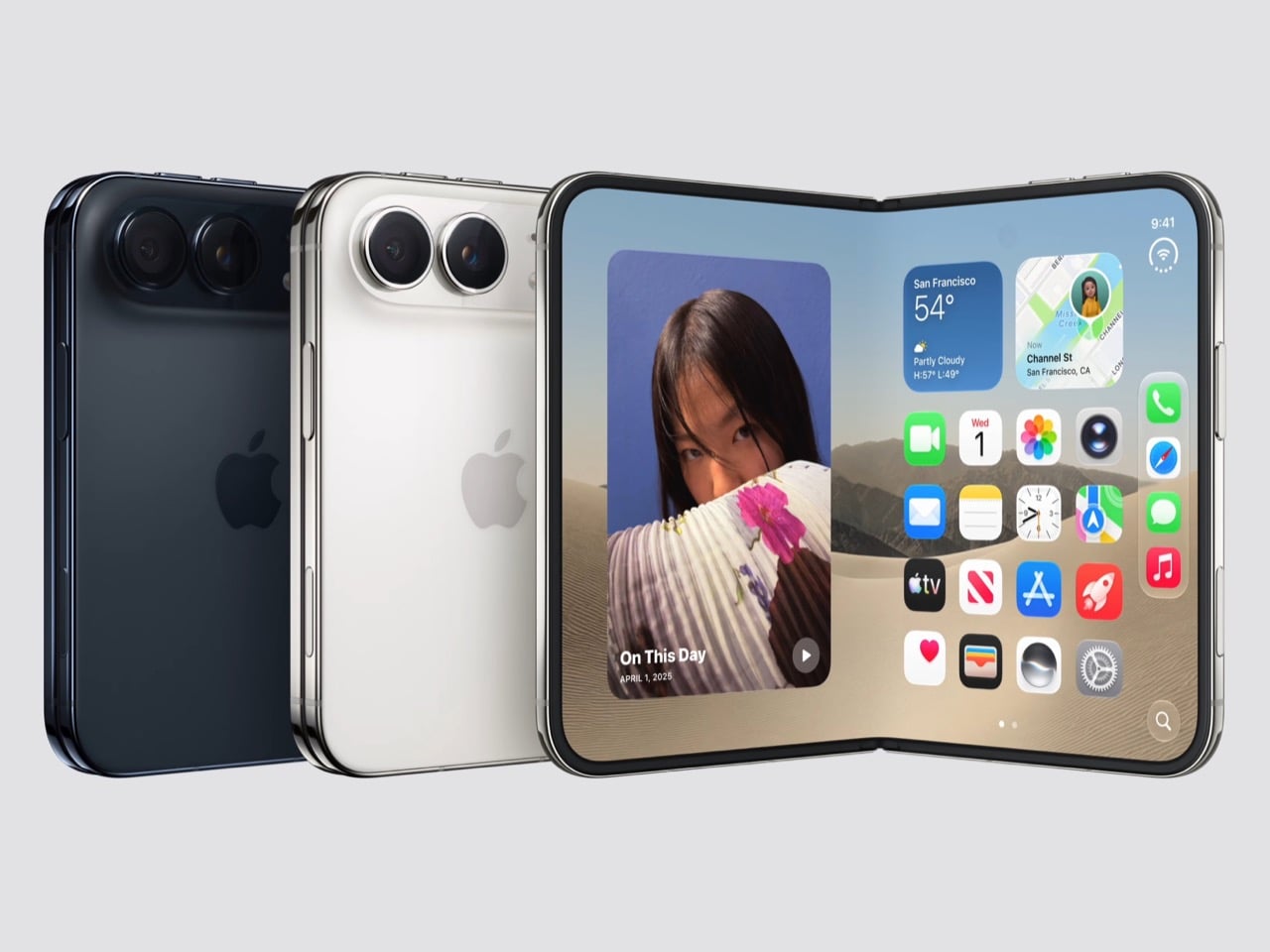
Spare a thought for the iPad Mini, which had a perfectly good career until this morning. Apple’s $1,999 iPhone Duo arrives October 23 with a 7.6-inch inner display that takes Apple Pencil with USB-C later this year and runs two apps side by side, which covers roughly everything the Mini was for, except the Mini does not fit in your jeans. It also killed the dynamic island, swapping it for a punch hole outside and a FaceTime camera tucked under the inner screen. And it killed the SIM tray worldwide, because the thinnest iPhone ever made had no room left for sentiment.

Apple never announces any of this. It ships the replacement and lets the old thing stop making sense on its own schedule. The Duo is a whole product built out of things Apple decided to stop carrying, and the interesting part is how little you miss any of them once you see what moved into the empty space. John Ternus called it the most transformational change to iPhone since the original, which I not only agree with, I think I’d take it a step further by saying – this is such a dramatic leap for the iPhone that it stops being an iPhone. It isn’t an iPad either. It’s something completely different.

Designer: Apple

Apple refused to build a squarish slab that happens to close, and said so from the stage, calling out rivals whose square inner screens box movies into oversized black bars. The Duo lands at roughly passport size, with an asymmetric profile: two rounded corners on the right, squared geometry at the hinge. That asymmetry does something clever, because it tells your hand which edge to open before your brain gets involved. It reads like a small hardcover you want to crack open, which is a strange compliment to pay a phone. Somebody fought for that shape in a review meeting, and I am glad they won.

Both displays share a single aspect ratio, which is the decision the whole product rests on. Closed, the 5.4-inch outer panel delivers 90 percent of an iPhone 18 Pro’s screen area, so it works as a complete phone rather than a notification window. Open, the 7.6-inch inner canvas runs 50 percent larger than an 18 Pro Max. Because the proportions match, content scales between the two instead of reflowing awkwardly every time you fold, and the movie you started on the cover screen simply gets bigger. Every foldable before this one asked you to accept a jarring transition, and Apple designed the jarring part out.

Content flows between the two displays as the phone opens, expanding out of the cover screen and settling into the larger canvas without a stutter. I would put that transition ahead of anything Samsung, Google or Oppo has shipped on a folding device, and it is the single most beautiful piece of UI in the category right now. The matched aspect ratio is what makes it possible, because there is no reflow to disguise, only a scale. Controls stay locked in place along the side while the content grows around them. Watching it happen is the closest a phone has come to feeling like sleight of hand.

The crease is the thing people notice first on a foldable, and Apple has more or less made it disappear. A matte nano-texture finish across the inner display cuts glare and flattens how the fold reads, so the eye stops finding the seam. It also solves the other foldable complaint nobody talks about, which is the cheap plastic feel of a folding panel under your fingertip. Real glass sits above and below the display, and the whole stack is built to stop the panel distorting after a few thousand folds. Nine years of waiting bought Apple a fold you have to hunt for.

Grade 5 titanium forms the frame, polished to a mirror finish and broken by a hinge cover in contrasting micro-blasted texture. That pairing is the sharpest visual detail on the object, a bright reflective body interrupted by one matte band at the spine, and it gives the closed device a piece of jewelry quality that photographs beautifully in star white. Ceramic Shield protects the back, Ceramic Shield 2 the front, and the whole thing carries an IP68 rating. Pulling that dust and water rating across a moving joint is genuinely difficult engineering. The night sky colorway, a deep navy, is the one I would actually buy.

The dock is vertical now. iOS 27 moved essential controls to the side of the screen, freeing vertical space for content and landing the buttons under your thumb, which rewrites a layout convention Apple has held since 2007. The status bar compresses into a corner and the Dynamic Island turns sideways along the edge of both displays. Every first-party app had to be relaid out to make this coherent, and the fact that it still reads unmistakably as iOS is the real achievement here. Nobody outside Apple would have been permitted to move that dock.

Fold it halfway and iOS slides content away from the crease, giving you a laptop-style prop for video calls, a hands-free camera rig, and a bedside alarm face that wakes you with a gentle glow. StandBy now runs even when the phone is off charge, turning it into a photo frame or widget hub the moment you set it down. The speakers retune themselves depending on how far apart the two halves are sitting. One device, half a dozen legible postures, all of them designed rather than discovered by users after launch. The alarm clock pose alone will sell a few thousand units.

The cameras take advantage of having a second screen. Duo Preview throws a live feed onto the outer display so your subject can see themselves and fix their own framing, which ends a decade of “can you take it again.” Kid Cue plays Peanuts animations to make toddlers look at the lens. Smart Take watches the scene and fires the shutter once everyone is finally posed, killing the timer scramble. A 48MP Fusion Main with a 2x telephoto handles the actual imaging, alongside the same 48MP Ultra Wide found on the iPhone 18 Pro.

Going eSIM only across every market freed the internal volume for one battery per side, managed so the pair behaves as a single cell, delivering 31 hours of video on the inner display and 44 on the outer. I will miss the tray as a traveler, and I also suspect Apple has wanted it gone for years, because a physical port punched through the frame is a liability on a device chasing IP68 across a hinge. A20 Pro drives both panels, and fast charging reaches 50 percent in around 20 minutes. Some deletions are grief. This one is mostly relief.

Touch ID in the side button is a real step back from Face ID on a two thousand dollar phone, and it exists because a TrueDepth array had nowhere to live. Apple Pencil support arrives later this year rather than at launch, which softens the iPad Mini argument for a few months. The bezels look chunky beside a Galaxy Z Fold 8, and the folded body still reads thick in the hands-on shots. At $1,999, a hundred dollars over the Fold 8 and five hundred under what everyone predicted, Apple showed up nine years late and priced like it was early. Pre-orders open October 16.

The post The iPhone Duo just killed the Dynamic Island, the SIM tray, and the demand for an iPad Mini first appeared on Yanko Design.

NBA 2K27 : Les meilleurs cartes de joueurs à moins de 20 000 crédits pour bien débuter sur MyTeam

Par : Ashelya
9 septembre 2026 à 14:30
Monter une équipe compétitive dans NBA 2K27 sans vider son portefeuille virtuel relève souvent du défi. Heureusement, l'Hôtel des Ventes regorge de pépites accessibles pour bâtir un cinq majeur solide dès le lancement de la saison MyTeam.

  • ✇Yanko Design
  • This Photographer Spent Weeks in a Suzhou Silk Studio. Here’s What He Found
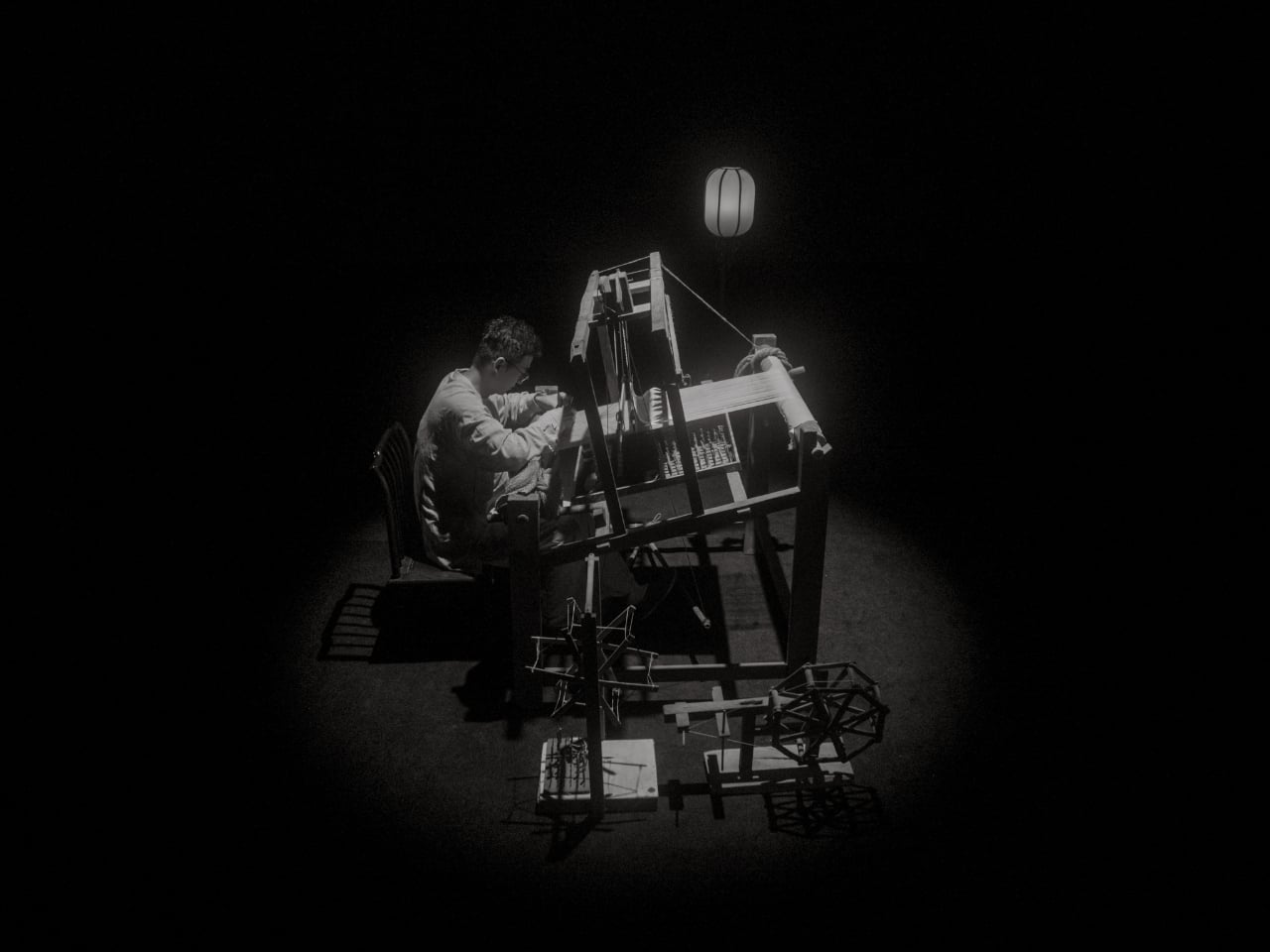
    When Jing Huang walked into a kesi weaving studio in Suzhou, China, he made a decision that runs counter to almost everything happening in photography right now. He put away the instinct to explain and just started watching. For most photographers working today, that would feel like leaving something on the table. In a studio where a finished piece can take months to complete, it turned out to be the only approach that made sense. Huang is a photographer with serious credentials. He won the Lei
     

This Photographer Spent Weeks in a Suzhou Silk Studio. Here’s What He Found

9 septembre 2026 à 14:30

When Jing Huang walked into a kesi weaving studio in Suzhou, China, he made a decision that runs counter to almost everything happening in photography right now. He put away the instinct to explain and just started watching. For most photographers working today, that would feel like leaving something on the table. In a studio where a finished piece can take months to complete, it turned out to be the only approach that made sense.

Huang is a photographer with serious credentials. He won the Leica Oskar Barnack Newcomer Award in 2011 for a series called Pure of Sight, and his visual style has always leaned toward stillness, restraint, and negative space rather than the kind of maximalist documentation that tends to flatten its subject. So when Lexar and Leica brought him to Suzhou to photograph kesi artist Hao Naiqiang, known professionally as Jingwei, the choice made sense on paper. What’s harder to predict is what happens when a photographer with that kind of discipline actually sits with a craft as slow and precise as kesi.

Artist: Hao Naiqiang (Jingwei) for Lexar and Leica

Photographer: Jing Huang

Kesi is a Chinese silk weaving technique that’s been around for centuries, and it operates on a logic completely alien to the way most things get made today. The artisan builds a piece thread by thread against a fixed warp, making constant decisions about color, contour, and rhythm with no automation, no shortcuts, and no undo button. There’s an old Chinese saying that captures it better than any technical description: an inch of kesi is worth an inch of gold. Jingwei has been practicing it for more than a decade and is formally recognized as a representative inheritor of the Suzhou tradition. Every finished piece represents a depth of time investment that genuinely earns that comparison.

What Huang found in that studio wasn’t a process to document. It was an atmosphere to respond to. His photographs don’t walk you through kesi step by step the way a documentary would. They move between Jingwei’s hands, the threads, the studio details, and the quieter visual textures of Suzhou itself, using the same painterly restraint that shapes his broader work. He described his own approach in a way that cuts straight to the point: photography, he said, is sometimes about forgetting time rather than recording it. What stays in an image isn’t when it was taken but whether it still carries beauty once the moment is gone.

That’s a fairly specific thing to believe in 2026, when the surrounding conversation about images is almost entirely about speed and generation. Anyone can produce a technically competent photo of silk threads in soft light right now without a camera, a plane ticket, or a studio. What that won’t produce is the weeks of presence, of actually being in a room watching another person work, that shapes how Huang sees and frames a subject.

This is where Lexar’s role in the project stops being a footnote. Grace Su, who heads Lexar’s European operations, made the point directly: before any photograph becomes a print, a press image, or a cultural archive, it first exists as an original file that needs to survive. Leica captures the moment. Lexar protects the file behind it. It’s a clean division of labor that gives the brand a genuine reason to be part of this story rather than just attached to it for the optics.

The show itself, titled Threads of Time: A Journey Through Silk and Lens, is presented at Leica Gallery Amsterdam and runs September 11 to 15. Curator Linda Warmerdam framed the exhibition as a dialogue between the photographer’s eye and the artisan’s hand, and that framing holds up, because both of those things require a body in a specific place at a specific time. No model trained on existing images can reproduce that.

You don’t need to care about textile history or gallery culture for the underlying point to land. Some things take real time, happen once, and mean something precisely because they can’t be convincingly faked. Huang spent weeks in a Suzhou studio to understand what kesi actually is. The photographs are what he brought back.

The post This Photographer Spent Weeks in a Suzhou Silk Studio. Here’s What He Found first appeared on Yanko Design.

  • ✇The Hacker News
  • U.S. Disrupts Xinbi Guarantee Scam Marketplace, Freezes $52.8 Million in Crypto
    The U.S. Department of Justice (DoJ) on Wednesday announced coordinated actions aimed at an illicit online marketplace called Xinbi Guarantee that offered scam services, including seizing Telegram channels used to run the service, confiscating two cryptocurrency wallets, and deploying the Scam Center Strike Force to Madagascar to help disrupt 13 scam compounds run by Chinese organized crime
     

U.S. Disrupts Xinbi Guarantee Scam Marketplace, Freezes $52.8 Million in Crypto

The U.S. Department of Justice (DoJ) on Wednesday announced coordinated actions aimed at an illicit online marketplace called Xinbi Guarantee that offered scam services, including seizing Telegram channels used to run the service, confiscating two cryptocurrency wallets, and deploying the Scam Center Strike Force to Madagascar to help disrupt 13 scam compounds run by Chinese organized crime

Elden Ring corrige en catastrophe un bug qui arrangeait bien les joueurs : « Le pire échec de FromSoftware depuis longtemps »

9 septembre 2026 à 14:10
Déployé en urgence par FromSoftware, le patch 1.17.1 d’Elden Ring est venu colmater une brèche particulièrement appréciée par les joueurs. Un bug en multijoueur permettait d’obtenir gratuitement les éléments du nouveau contenu payant à cinq euros, provoquant l’agacement d’une communauté déjà frileuse...

  • ✇Yanko Design
  • The $179 iPhone Speaker That Never Needs Charging
    You’ve been waiting for your favorite artist to release their latest album, counting down the hours until it finally drops on your streaming service of choice. You open your phone and press play… and you’re a little disappointed. It’s not that the album isn’t great, it’s that your phone’s speaker doesn’t do it justice. You want something to amplify that sound right now, but your external Bluetooth speaker hasn’t been charged in weeks. The Battery-free Amplifying iSpeakers can solve that problem
     

The $179 iPhone Speaker That Never Needs Charging

9 septembre 2026 à 13:20

You’ve been waiting for your favorite artist to release their latest album, counting down the hours until it finally drops on your streaming service of choice. You open your phone and press play… and you’re a little disappointed. It’s not that the album isn’t great, it’s that your phone’s speaker doesn’t do it justice. You want something to amplify that sound right now, but your external Bluetooth speaker hasn’t been charged in weeks.

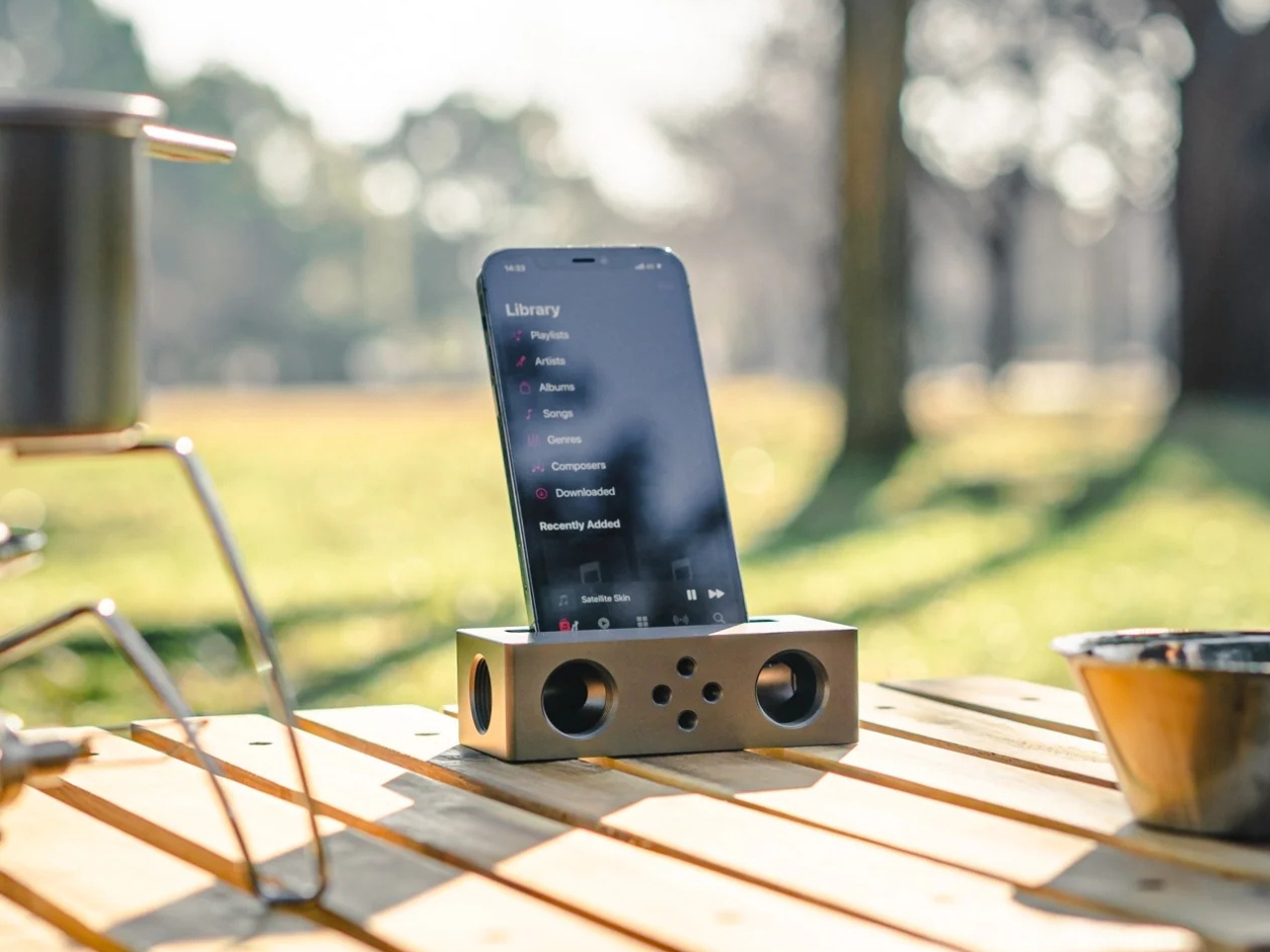
The Battery-free Amplifying iSpeakers can solve that problem for you, and you won’t need a single cable or Bluetooth connection to make it happen. This “dumb” speaker is actually smart enough to rely purely on acoustic engineering, channeling and amplifying the sound waves coming out of your phone so your music, podcast, or call sounds noticeably fuller than it would through your built-in speaker alone.

Click Here to Buy Now: $179.00

Designed by Ooi Masato and made in Japan, this battery-free device lives up to its name: it uses a precision-machined metal slot that cradles whatever phone you own, instantly amplifying whatever you’re playing. There’s no pairing process, no cord to plug in, and no anxious glance at a battery icon wondering if your speaker will cut out mid-song. You set your phone down, and it just works.

Design-wise, the iSpeakers follow a clean, minimalist aesthetic that looks just as at home on a cluttered work desk as it does on a nightstand or a bookshelf. The body is shaped around the golden ratio, giving it a visual balance that feels intentional rather than accidental (the kind of object you’d leave out on display rather than tuck into a drawer). It’s compact enough to toss in a bag, so you can bring your amplified sound with you to a picnic, a hotel room, or a friend’s backyard without hunting for an outlet. And because there’s no port, connector, or wireless protocol involved, it works with virtually any phone you own, including Apple’s freshly announced iPhone 18 Pro lineup and its first ever foldable, the iPhone Ultra, unveiled at today’s “Surprise and Shine” event. All you have to do is let the speaker slot cradle your phone’s speaker grille; there’s no compatibility chart to check and no software update to wait on.

The speaker itself is milled from Duralumin, the same lightweight, vibration resistant alloy used in aircraft construction. That means you’re getting a premium feel along with genuine durability. This isn’t a flimsy accessory that’ll crack after a few drops in your bag. The Japanese craftsmanship and golden ratio proportions give it a quiet sophistication that fits in seamlessly next to your laptop or coffee mug. If you want to get more out of it, you can also pick up the +Bloom and +Jet attachments, which let you customize how the sound projects, whether that means directing it upward for a fuller room fill or downward for a more intimate listening experience.

So how does this stack up against the Bluetooth speakers already crowding your shelf? Take a brand like JBL, whose Flip series has become a go-to for portable audio. Those speakers sound great and pump out serious volume, but they still ask you to charge them, remember to pair them, and eventually deal with a battery that won’t hold a charge like it used to. The iSpeakers skip all of that by design. You’re trading a bit of raw volume and bass depth for something Bluetooth speakers simply can’t offer: a device that will sound exactly the same in ten years as it does today, with zero maintenance and zero electronic waste. At $179, it’s priced closer to a premium Bluetooth speaker than a budget one, but you’re paying for a very different kind of value: permanence, craftsmanship, and simplicity over specs and app connectivity.

At the end of the day, the Battery-free Amplifying iSpeakers isn’t trying to replace your Bluetooth speaker for a backyard party. It’s solving a much smaller, more common frustration: the moment when you just want your phone to sound better, right now, without any setup. For anyone tired of charging cords, pairing screens, and speakers that die at the worst possible moment, this is a refreshingly simple fix, and a genuinely beautiful object to boot. Sometimes the smartest tech is the kind that doesn’t need power at all.

The post The $179 iPhone Speaker That Never Needs Charging first appeared on Yanko Design.

  • ✇The Hacker News
  • Four Spy Groups Used the Same Chrome and Windows Exploit Kit Within a Week
    Multiple espionage-motivated threat activity clusters have been found deploying a previously undocumented exploit kit called BlueMoon that chains together multiple vulnerabilities in Microsoft Windows and Google Chrome. The first in-the-wild use of BlueMoon has been attributed to the China-aligned state-sponsored group tracked as APT31 (aka Bronze Vinewood, Judgement Panda, JungleBamboo,
     

Four Spy Groups Used the Same Chrome and Windows Exploit Kit Within a Week

Multiple espionage-motivated threat activity clusters have been found deploying a previously undocumented exploit kit called BlueMoon that chains together multiple vulnerabilities in Microsoft Windows and Google Chrome. The first in-the-wild use of BlueMoon has been attributed to the China-aligned state-sponsored group tracked as APT31 (aka Bronze Vinewood, Judgement Panda, JungleBamboo,

❌